ST. LAWRENCE STRING QUARTET
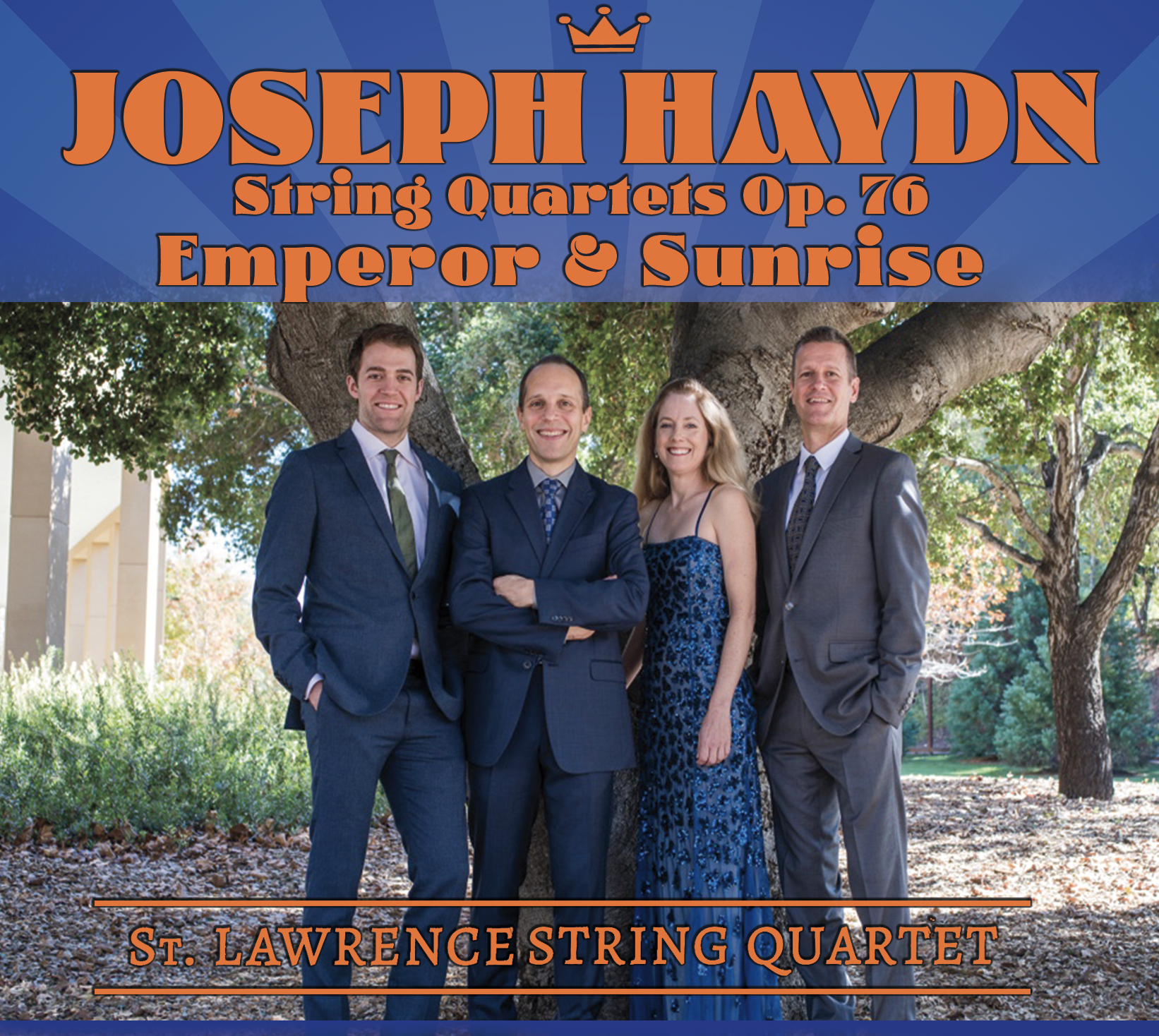
Joseph Haydn String Quartets Op. 76 Emperor & Sunrise

St. Lawrence String Quartet Podcast
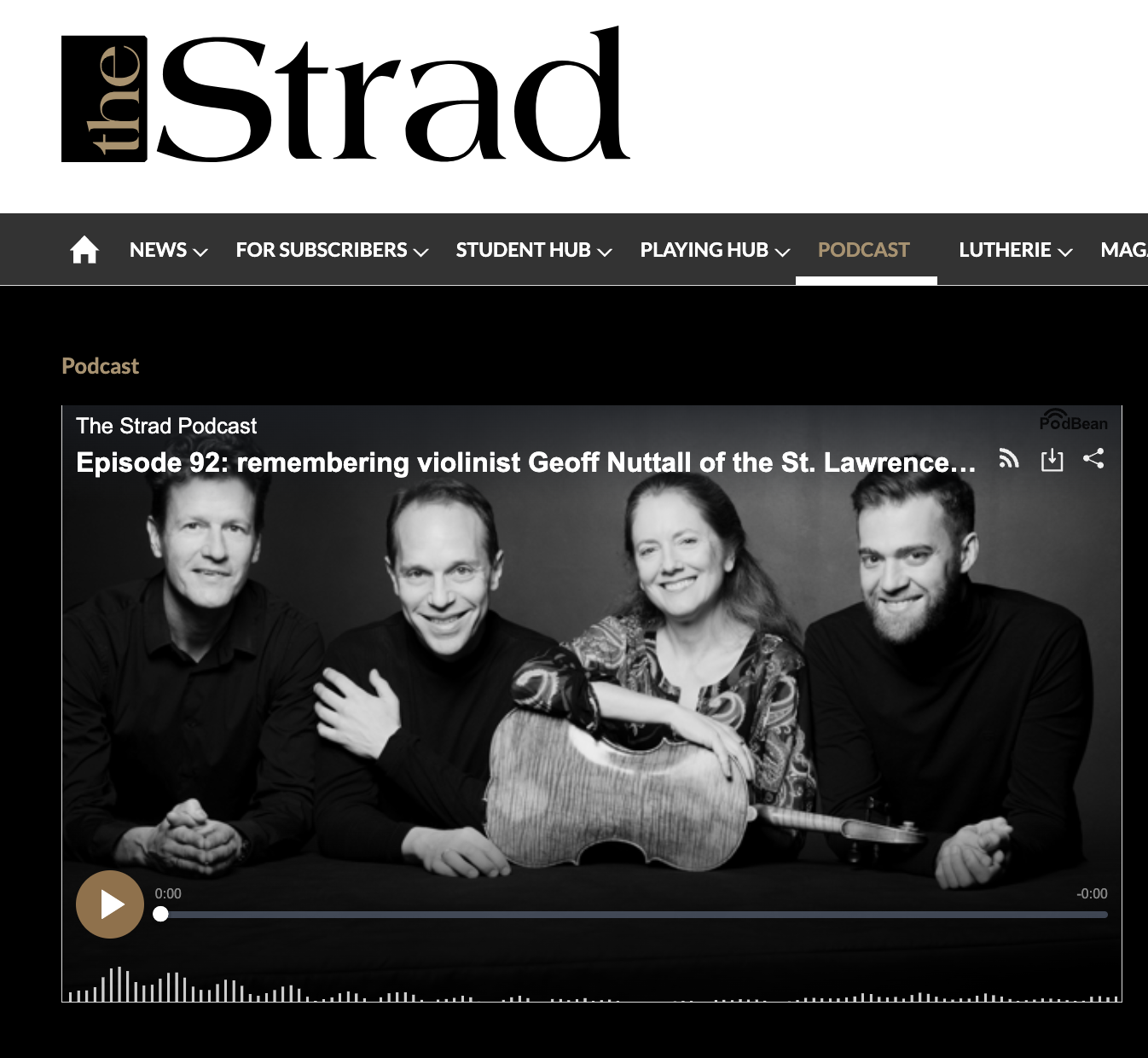
Final Notes & Lasting Legacy: The St. Lawrence String Quartet on Korngold, Haydn, and Geoff Nuttall
In this moving episode of Musical Minds & Missions (M³), host Sarah Cahill is joined by pianist Steven Prutzman and members of the St. Lawrence String Quartet—Owen Dalby, Leslie Robertson, and Christopher Costanza—for a conversation centered on two recordings from Phenotypic Recordings: Erich Wolfgang Korngold’s Piano Quintet and Joseph Haydn’s “Sunrise” Quartet.
At its heart, this episode is a tribute to founding violinist Geoff Nuttall. Recorded during the final chapter of his life, these sessions capture a remarkable blend of intensity, humor, and total commitment to the music. The group reflects on their origins, their deep connection to Haydn, and the artistic bond that defined their sound. They also share why, after Nuttall’s passing, the quartet chose to bring its journey to a close—honoring the chemistry that made the ensemble what it was.
The music featured in this episode is available on Bandcamp and all major streaming platforms, with links in the show notes.

The show-stopping farewell album from the beloved St. Lawrence String Quartet, stunning performance of two of Joseph Haydn’s monumental quartets from his Op. 76: No. 3 "Emperor" and No. 4 "Sunrise".
The St. Lawrence String Quartet, album in residence at Stanford University, has been hailed as one of the leading ensembles specializing in the performance and recording of the works of Haydn. According to The New Yorker, “…no other North American quartet plays the music of Haydn with more intelligence, expressivity, and force…”
SLSQ’s celebrated founding violinist Geoff Nuttall passed away in 2022 from pancreatic cancer. Phenotypic Recordings will donate all proceeds from this album to the Geoff Nuttall Memorial Fund for cancer research at Stanford University.
LISTEN




ST. LAWRENCE STRING QUARTET
“Modern,” “dramatic,” “superb,” “wickedly attentive,” “with a hint of rock 'n roll energy” are just a few ways critics describe the musical phenomenon that is the St. Lawrence String Quartet (SLSQ). The SLSQ is renowned for the intensity of its performances, its breadth of repertoire, and its commitment to concert experiences that are at once intellectually exciting and emotionally alive.
Founded in Toronto in 1989, the SLSQ were renowned for their high-energy, deeply expressive, and “take no prisoners” approach to all music, and beloved for nurturing an engaged and inclusive musical community. As Alex Ross of The New Yorker aptly noted, “the SLSQ is remarkable not simply for the quality of their music-making, exalted as it is, but for the joy they take in the act of connection.”
Well-known for performing a broad and eclectic repertoire, SLSQ were especially regarded for their commitment to the music of Haydn and new music.

Album Information
COMPOSER: Joseph Haydn
TITLE: String Quartets Op. 76 Emperor & Sunrise
ARTISTS: St. Lawrence String Quartet (Geoff Nuttall, violin; Owen Dalby, violin; Lesley Robertson, viola; Christopher Costanza, cello)
RELEASE DATE: 5/31/2023
SUMMARY: The show-stopping farewell album from the beloved St. Lawrence String Quartet, stunning performance of two of Joseph Haydn’s monumental quartets from his Op. 76: No. 3 "Emperor" and No. 4 "Sunrise".
CREDITS: Recorded at Bing Concert Hall in Stanford University, December 14 and 15, 2021 | Produced and Engineered by Mark Willsher | Album design by Aryahi Naomi Onaga | Cover photo by Eric Cheng
DEDICATION: Dedicated with love to Livia, Jack and Ellis
MUSIC WITH A MISSION: Phenotypic Recordings will donate all proceeds to the Geoff Nuttall Memorial Fund for pancreatic cancer research at Stanford University
-
String Quartet in C Major Op. 76, No. 3 "Emperor"
I. Allegro
II. Poco Adagio. Cantabile
III. Menuetto. Allegro
IV. Finale: Presto
String Quartet in B-flat Major Op. 76 No. 4 "Sunrise"
I. Allegro con spirito
II. Adagio
III. Menuetto. Allegro
IV. Finale. Allegro ma non troppo)
-

String Quartet in C Major, Op. 76, No. 3 “Emperor”
Haydn's final "six pack" of string quartets, Op. 76, completed in 1797, may well constitute the finest works of the genre before Beethoven's middle period. Though Haydn wrote dozens of quartet masterworks over the decades in a more or less consistent progression of excellence, beauty and ingenuity, his style becomes ever more fluid, inventive and brilliant. The quartets composed after his celebrated trips to London in the late 1790's show a new vitality and grandeur with greater virtuosity, power, depth of thought and feeling spanning a greater range across every essential musical facet: melody, figuration, polyphony, harmony, rhythm, texture, dynamics, formal innovation and expressive dramatic narrative. Haydn's Op. 76 quartets reflect Mozart's innovations and anticipate some of Beethoven's. They are simply stunning and essential touchstones of the art from its original pioneer during his burnished maturity. Three of the six quartets have pet names, "Fifths", "Sunrise", "Emperor", and this last, Op. 76, No. 3 in C major, is surely the most famous for its slow movement hymn that become, over time, more than one national anthem. But like all the quartets of Op. 76, the "Emperor" is magnificent throughout its four movements including some artistic cross-connections for a composite of finely wrought coherence.
The opening Allegro is bright, crisp sonata form with several striking features. Haydn was fond of "monothematic" sonatas where the two traditional key areas sport nearly the same musical material subtly transformed. In this case, the first five notes form a vivid rhythmic figure that is pervasive throughout the movement, appearing in themes, countermelodies, variations and furtive base lines as though all the music springs from a single tiny gene. The musical character is robust and rustic with evocations of hunting horns and a peasant dance as syncopations in the exposition develop into a lively Musette. Haydn's development continues right through the recapitulation and into an impressive coda. Simple, effective means evolve into elegant, rich music.
The tender heart of the quartet is the slow movement, a theme and five variations based on Haydn's own hymn Gott erhalte Franz den Kaiser (God Save Emperor Franz), possibly derived from a Croatian folk song. The tune with its warm, familiar harmonies is instantly winning, but Haydn deepens its impact through a series of intimate and poignant transformations. Each of the instruments takes a turn singing the melody while the texture thins and grows again through contrapuntal elaborations and canonic echoes, soft, nuanced and perhaps ever more melancholy. Haydn gently introduces increasing chromatic color as a sturdy Austrian Hymn becomes Mozart before our ears. The last variation with the first fiddle in its high register seems to add a halo, a quiet, reverent glow.
The minuet restores some bucolic mirth with a springy dance and a bouncing down beat unrolling in a kind of extended phrase structure that finds the music whirling giddily beyond our conventional expectations for rhythmic closure. Unlike many Haydn minuets, the trio seems to continue as another phrase of a single larger unified piece without strong sectional contrast. It is like a slightly sad elaboration completing a single story before the refrain. It is as if the slow movement's lyricism continues to flow through the scherzo.
Haydn's finale surprises twice. It is not a characteristic rondo, nor a variation set nor even a fugue, but another well-formed sonata. And, it begins quite dramatically, full of bluster in a minor key. The ending appears to be quite a bit more serious than the beginning, almost shockingly so. But a transition from dark to light begins with a familiar motive: a slight variation of the rhythmic gene from the first movement, an old friend returned. The stormy energy of the first violin's anxious cadenzas becomes a bright, dashing counterpoint to the five-note motive as agitated tension becomes brilliant splendor, the high-strung hallmark of Viennese Classicism. The thematic connection between the first and last movement is sleight of hand and high art. The conclusion organically leads right back to the beginning as if the entire quartet were conceived as a loop. As its nickname implies, "The Emperor" is a unique individual of great regal bearing.
String Quartet in B-flat, Op. 76, No. 4 "Sunrise"
Haydn published Op. 76, his last set of six string quartets in 1797 just one year before a young Beethoven would begin his own first foray into the same genre. From approximately 1759 to 1799, Haydn composed 78 string quartets over a period of forty years of which at least 30 are "celebrated" as masterworks of the form. It seems his powers never diminished. Indeed, one feels that he only continued to get better and better placing Op. 76 at the zenith of his achievements. Written in Haydn's "final" phase, the quartets are bold and burnished, composed for public performance at the height of his international fame on the heels of his grand concert trips to London. The six quartets also stand alone in a special historical context coming after Mozart and before Beethoven. So beloved and enduring are these works that three of them have nicknames, bestowed upon them by an adoring public who, at one time, knew each quartet as we might know the stars at night.
The fourth quartet in B-flat is known by the English nickname "Sunrise". The first movement begins with the sustained glow of a single, soft chord over which a solo violin slowly traces the rising sun. Several "introductory" measures fuel this growing dawn until the first full-fledged theme bursts like blinding light, the sun fully emerged. To emphasize this transition, Haydn does it twice in the exposition, the second time letting the sun temporarily set by inverting the theme, the cello playing it upside down, followed by a second theme of ever more dazzling light. A taught and rich development explores the sunrise in a much darker guise in the minor mode before a recapitulation that significantly enhances the opening materials with fresh realizations. This tendency of constant development pervades the quartet from beginning to end.
Haydn's genial brilliance tends to dominate his persona overshadowing the nuanced poignancy and even darkness one finds in his slow movements. The Adagio is a kind of holy hymn, a delicate supplication tinged with a mysterious sorrow. It is not hard to imagine this as a somber sunset, a counterweight to the ebullience of the first movement.
As the Minuet found its way into the standard plan of the classical symphony and quartet, Haydn, Mozart and Beethoven expanded its range to become the wild card for a lively triple-meter dance characterized by rhythmic idiosyncrasies, clever writing, surprise, humor and the point of contrast between Scherzo and Trio. Here, Haydn transforms the French courtly dance into a robust German waltz with a steady downbeat and strong forward momentum. The trio transports the dance from a beer hall to the countryside as the drone of the French musette completes the transformation from palace to peasantry, a touch of the pastorale.
The finale begins with what sounds like a charming English folk song, crisp and tuneful with a jolly lilt. But like Beethoven, Haydn had an inexhaustible skill for transforming simplicity into elegance through the power of imaginative variation. The tune sets our expectations for a lively rondo featuring little explorations between recurrences of the friendly reminder, but it is the tune itself that takes on the adventure a parade of thematic variations. The marvel of Haydn's ingenuity is only enhanced by a constant sense of accelerating tempo as the last variation scurries beyond our breathless reach into a giddy final cadence. Haydn's inestimable achievement raised music to the highest levels of elegant play and the sheer pleasure of delicious design.
~ Kai Christiansen
© Kai Christiansen
Used by permission. All rights reserved.