
Coming Soon!
Segara Gunung - Kronos Quartet
Peni Candra Rini
Liner Notes
Candra Rini’s collaboration with the Kronos Quartet creates an organic musical tapestry, a genuine artistic dialogue—an invitation to listen more deeply to the Earth and to one another.
Speaking about Kronos at the world music exposition WOMEX, music journalist Jim Hickson observed, "collaboration has opened up soundscapes that would otherwise be inaccessible for a humble string quartet." This partnership goes even further, making those soundscapes accessible to audiences around the world while reimagining what a string quartet can become. As David Harrington has often observed, Kronos thinks of the quartet as a single instrument in its wholeness. In this respect, it shares an essential philosophy with the Javanese gamelan orchestra: both become complete only through the ensemble, where the collective voice transcends the sum of its individual parts.
Together, Kronos and Candra Rini create music that connects multiple ecologies—nature, tradition, memory, history, and time—inviting listeners into an emotional journey that is at once deeply rooted in Javanese culture and profoundly relevant to our shared future.
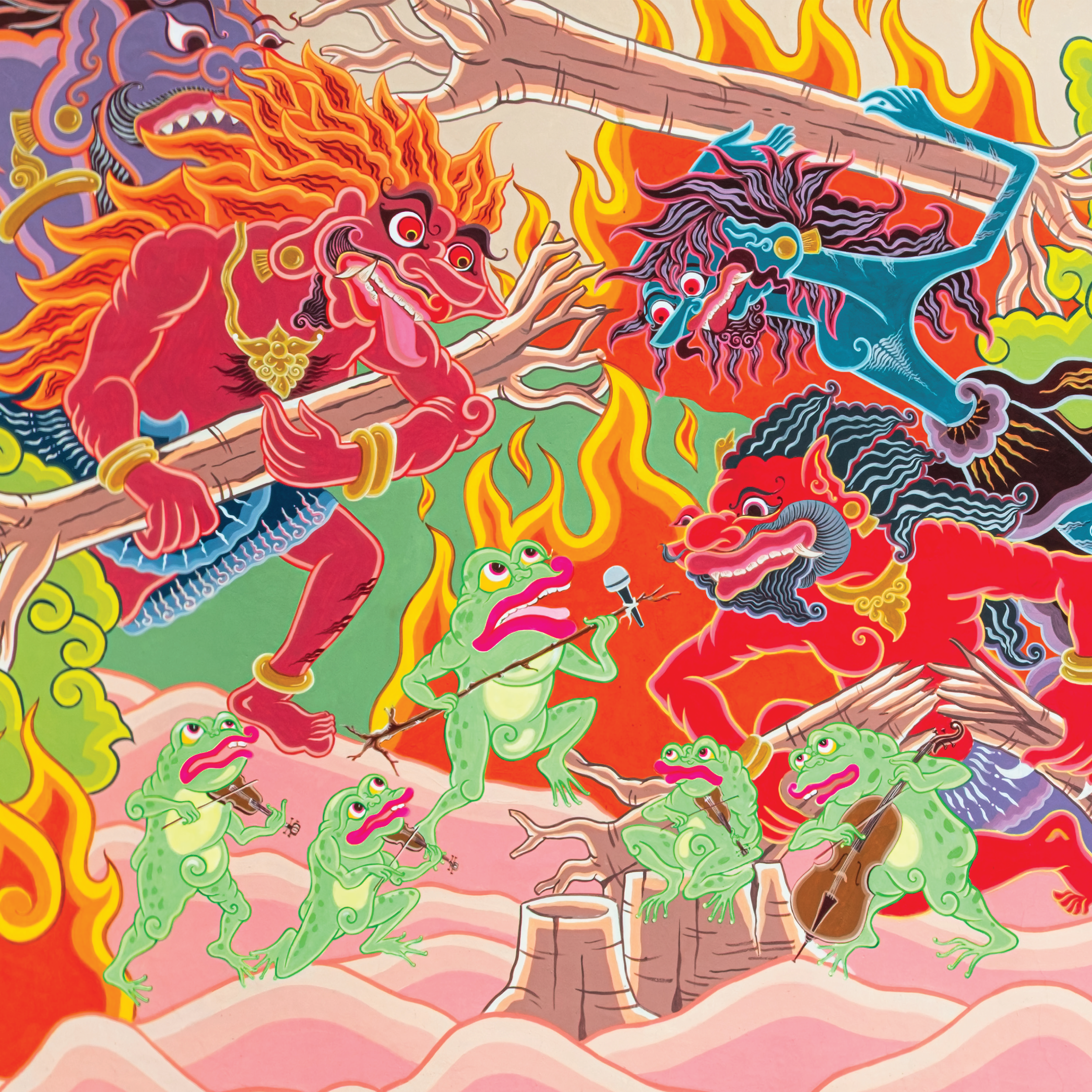
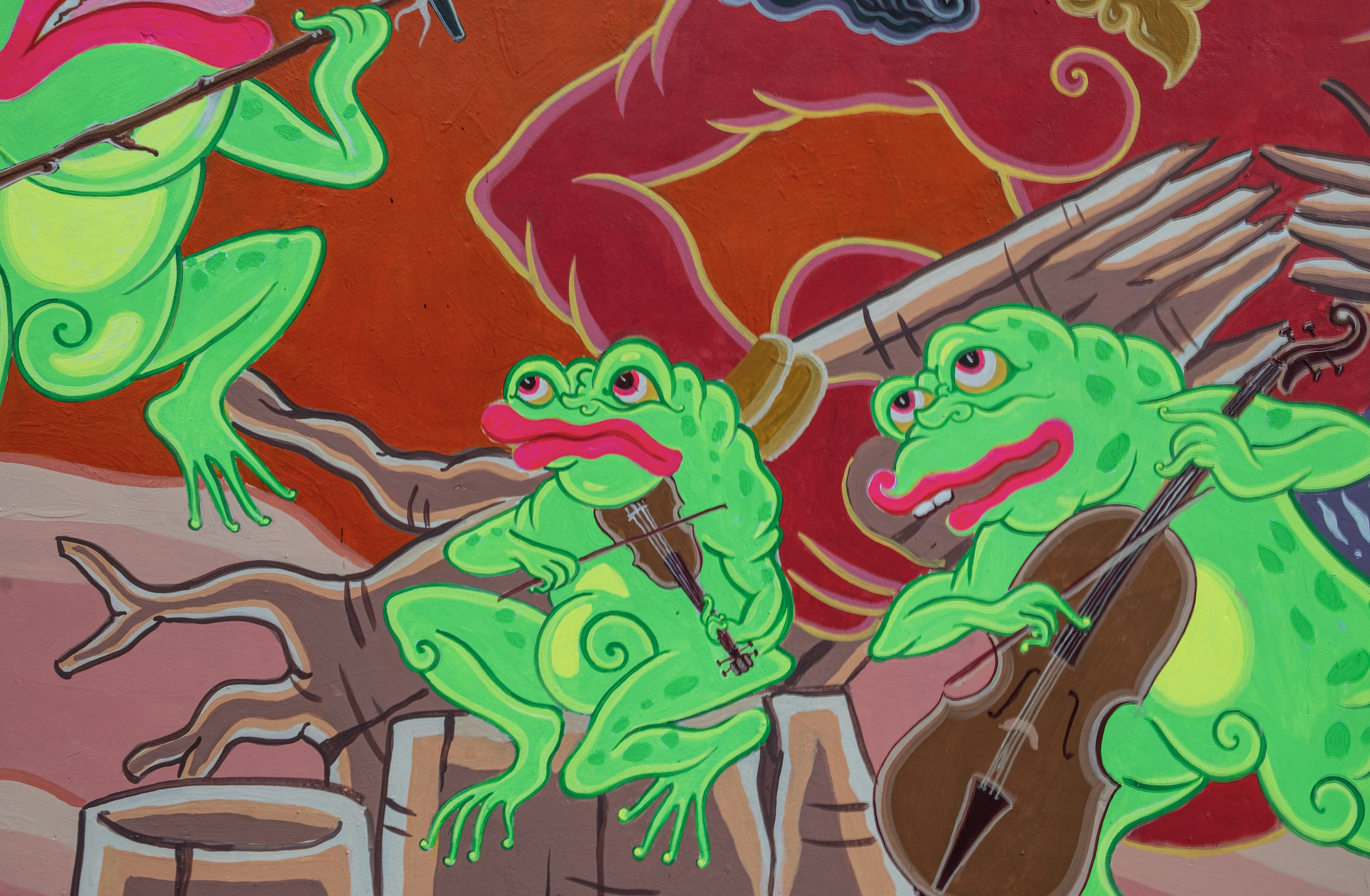
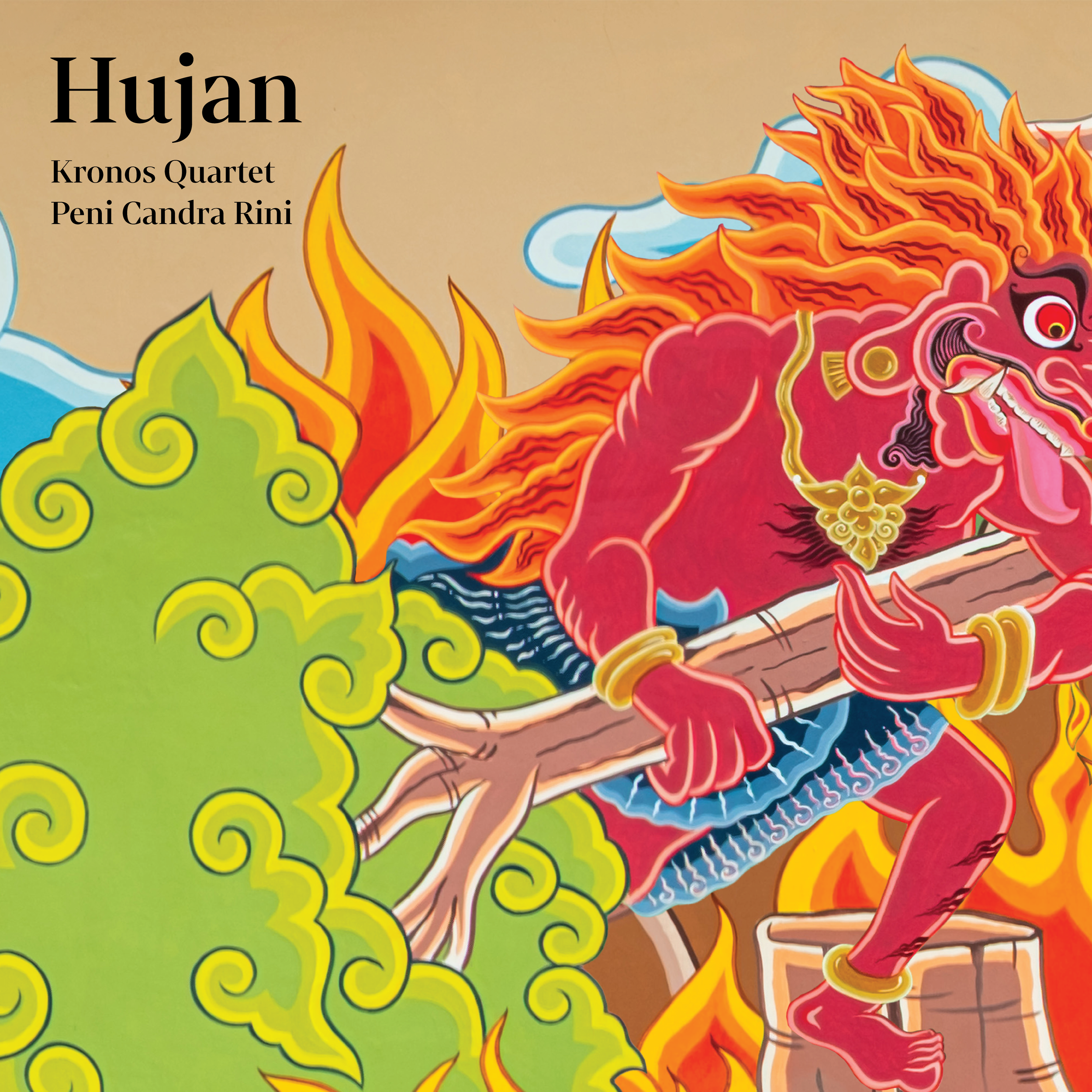
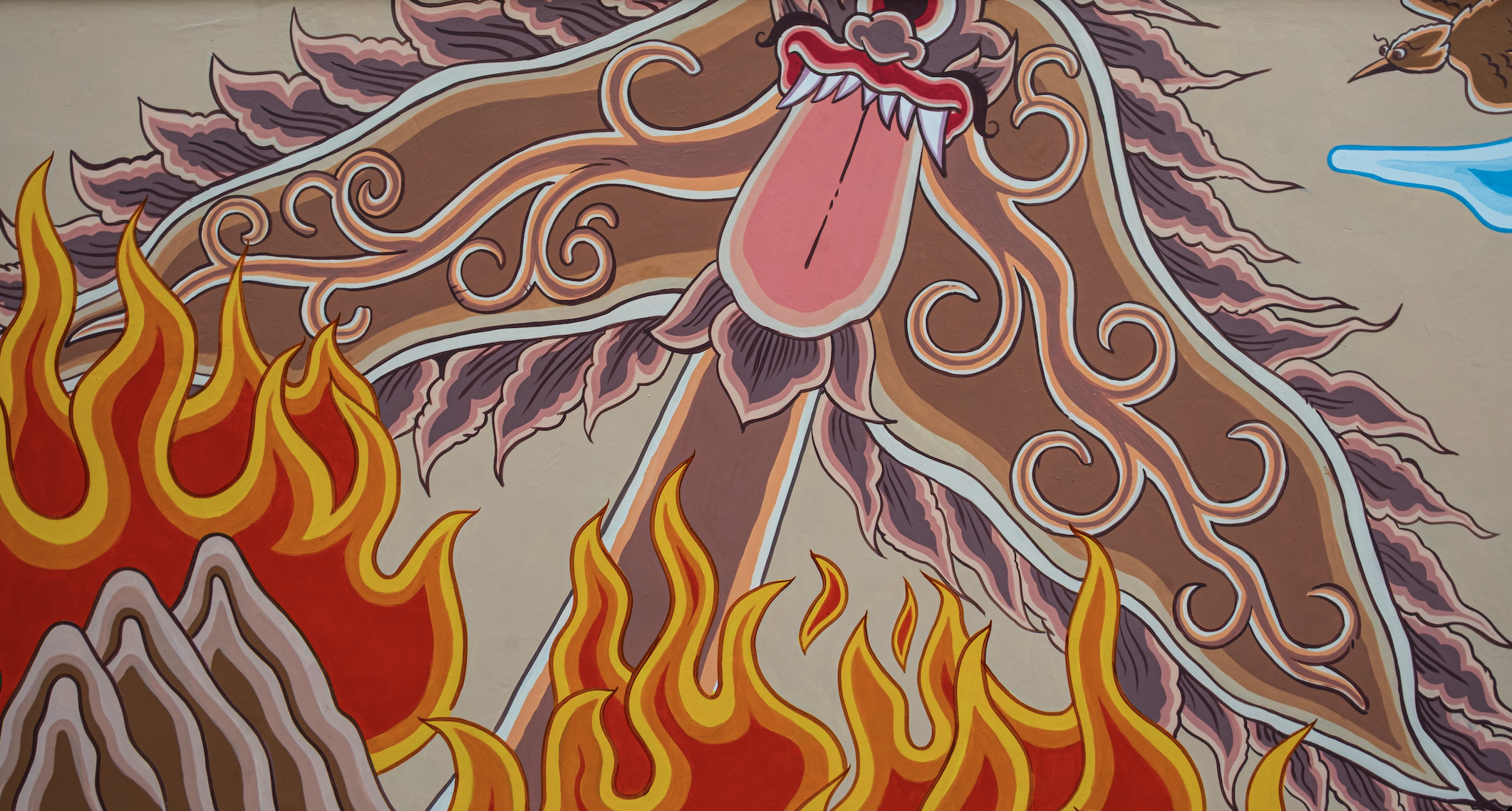
Album Art Designer: Bambang Wahyudi

LISTEN:






Peni Candra Rini
Peni Candra Rini grew up in the traditional music world of the classical Javanese gamelan (a large ensemble of metallophones, gongs, and other percussion instruments). On the island of Java, the gamelan is known for its accompaniment of wayang kulit shadow puppet theater. Here, the dhalang, or puppeteer, conjures a universe with epic stories, moral teachings, bawdy clowns, political commentary, and mystical reflection. The wayang performance is animated not only by the puppeteer's storytelling voice and the gamelan but also by the pesindhen, the highly trained female singer whose artistry has long been revered in Javanese culture, much as great opera singers are celebrated in Western Culture.
Peni Candra Rini grew up in this world. Her father is a dhalang, and from early childhood she absorbed the music, stories, and philosophy of his artistry as a master puppeteer. After moving from East Java to Central Java, she came under the guidance of the late composer and musician Rahayu Supanggah, one of Indonesia’s best-known composers who became almost a second father to her. Like Candra Rini, Supanggah has collaborated with the Kronos Quartet and also came from a family of dhalangs. He recognized in Candra Rini an extraordinary talent not only as a singer but as a composer. Supanggah took her under his wing and was keen to encourage a new generation of Indonesian composers, especially with a woman in a leading role.
Indonesia has seen an extraordinary flowering of new music composition. Rooted in tradition and at the same time innovative, these composers draw upon classical, folk, and popular traditions to create works that felt entirely authentic and unmistakably Indonesian. The Festival Komponis Muda (Young Composers Festival) in Jakarta exemplified this creative vitality. The music was fresh, confident, and deeply grounded in Indonesian traditions without feeling any need to emulate Western musical models. Supanggah toured New Music Indonesia in 1991 during the Festival of Indonesia, bringing this music to audiences in the United States, featuring a remarkable generation of composers, all male.
Peni Candra Rini possesses an extraordinary vocal range spanning four octaves. At one moment, her luminous soprano has the purity and clarity of a violin, lifting the listener skyward; at another, she summons a guttural, almost primal growl that seems to emerge from the depths of the earth. Having grown up in the shadow puppet world, she draws effortlessly upon its many characters, stories, and emotional landscapes. Her music moves fluidly between mythic imagination and present-day reality, expressing both wonder and an urgent concern for the future of our planet.
The Kronos Quartet
For over 50 years, the Kronos Quartet has reimagined what the string quartet can be. One of the most celebrated and influential groups of our era, Kronos has given thousands of concerts worldwide, released more than 70 recordings, and collaborated with many of the world’s most accomplished composers and performers across many genres. Kronos has received more than 40 awards, including three Grammys and the Polar Music, Avery Fisher, and Edison Klassiek Oeuvre Prizes.
In 2024, Kronos’ Pieces of Africa album was inducted into the National Recording Registry at the Library of Congress. Most recently, Kronos Quartet has been selected as the Doomsday Clock Artists in Residence for The Bulletin of the Atomic Scientists.
Coming Soon!
SHOP

The Album Segara Gunung
Performed by Kronos Quartet & Peni Candra Rini
Composer: Peni Candra Rini
Kronos Quartet (David Harrington, violin, Gabriela Díaz, violin, Ayane Kozasa, viola, Paul Wiancko, cello)
-
Recorded March 19-20, 2025, at Modlin Center for the Arts, Richmond, Virginia
Recording Producer: Judith Sherman
Recording Engineer: Scott Fraser
Mixing: Judith Sherman, John Kilgore, David Harrington
Editing Assistant: Jeanne Velonis
Mastering: Judith Sherman
Segara Gunung and Kumuda Djiwa gamelan arrangements created and performed by Andy McGraw and Peni Candra Rini
Liner notes: Rachel Cooper
Album Art Designer: Bambang Wahyudi
Wayang Beber Welingan Mural Painting Team: Ponno Anggo, Joko Sugiarto, and Bambang Wahyudi, supported by Propan and Idud Sentana Art, located at Jagad Culture House.
Photography: Artsinda Kinanthi Violatina and Banu Sidharta.
Graphic Design: Baron Arts
Translations: Andy McGraw
-
Segara Gunung (Ocean Mountain)
[Peni Candra Rini arr. Jacob Garchik]
I. Segara Gunung (Ocean Mountain) ~ 7:11
II. Agni (Fire) ~ 8:30
III. Ketiga Dawa (Drought) ~ 6:21
IV. Hujan (Rain) ~ 6:35
Maduswara (Voice of Honey) ~ 11:48
[Peni Candra Rini arr. Jacob Garchik]
Kumuda Djiwa (Lotus Soul) ~ 9:43
[Peni Candra Rini arr. Jacob Garchik]
-
Disc 1
Quartet No. 1 (2008)
After roughly fifteen years of composing and at least twenty performing inside a string quartet as a violist, I finally summoned up the nerve to write my first string quartet. Bernard Ferrari, a member of The Juilliard School’s Board of Trustees, wanted to celebrate his retirement with the commission and premiere of a new composition, and my name apparently came up in the conversation.The work adheres to the time-honored sequence of four movements. Within this familiar structure, I wanted to interject some unpredictable sonorities and textures. For example, I inverted the registers of the instruments in the opening movement, with the “lower” strings soaring high above the violins in the opening movement. The second and fourth movements incorporate subtle elements of the vernacular (lush, hyper-Romantic Hollywood scoring and perky video game-style riffs respectively). Overall, the work is perhaps my most conventional quartet of the set, but quirky enough to help me feel like I contributed something new to the canon, and more importantly, got that monkey off my back. Quartet No. 1 was commissioned by Dr. Bernie Ferrari and received its premiere by the Biava Quartet in 2008.
—
Quartet No. 2: Concussion Theory (2012)
During the ecological disaster of the 1930s "Dust Bowl," the US government funded desperate attempts to manipulate the rain to fall from the sky. While none of these were successful, a popular method was the launching of TNT into the sky, in hopes of creating moisture-filled clouds with their explosions. This idea was called "concussion theory," a term and procedure that I found intriguing, and became the inspiration for this work for string quartet. Written in four short movements, Concussion Theory explores several aspects of this historically unprecedented plight and unusual experiments to address it. The first movement, No Man's Land, presents a dire scene of the parched, barren earth of the Great Plains, with a scorching sun and only a rustling of tumbleweed to interrupt the desolate stillness. Black Sunday recalls a battered, downtrodden community church gathering in 1935 on day one of the worst dust storms of that era blacked out a region spanning five states. The third movement, Concussion Theory, depicts the blazing fireworks of explosives fired into the heavens above, followed by A Gentle Rain, a fantasy of cathartic rainfall; a bittersweet, would-be outcome of this experiment that, alas, in reality never actually occurred. This work was commissioned by the Hanson Institute for American Music of the Eastman School of Music at the University of Rochester and premiered by the Ying Quartet at the Eastman School of Music in 2012.
—
Quartet No. 3: Apocryphal Dances (2017)
Conceived as a love letter to the Baroque dance suite, Apocryphal Dances is a work of “historical fiction.” As the title suggests, my writing is not so much historically informed as it is historically inspired. Using conventions of 18th-century French dance rhythms and gestures as a point of departure, I added anachronistic contemporary touches (some more subtle than others), and my own personal vocabulary to create a suite of five short dances (Entrée grave, Rigaudon, Passacaille, Musette, and Tambourin) meant as nothing more than twelve minutes of good clean fun offered humbly for the amusement of the performers and their audience. This work was commissioned and premiered by 45th Parallel, May 2017, in Portland, Oregon.
—
Disc 2
Quartet No. 4: after, life (2021)
As part of a covert operation violating the 1962 Geneva Accords, the United States military dropped more than two million tons of explosive ordnance on the tiny country of Laos between 1964 and 1973, making it the most bombed country, per capita, in the history of the world. In perspective, the U.S. dropped an average of one bomb every eight minutes around the clock for nine years, resulting in over 200,000 Lao civilian deaths, with another 20,000 and counting of mostly curious children since then, who continue to discover and accidentally detonate the millions of UXO (unexploded ordnance) still contaminating, or in Lao terms, “haunting” the countryside. After the war, Laotians embarked on a difficult journey to recover from these years of dehumanizing violence and callous neglect. after, life is a meditation on this process of healing and restoration; both of the land itself and for the people who remain its stewards. Written as a response in homage to George Crumb’s groundbreaking Black Angels, my quartet regards Crumb’s amplification, extended techniques, and non-traditional notation as curious artifacts left behind for quiet exploration centering Asian civilians rather than American soldiers. Out of an eerie texture of ghost-like effects depicting the haunting of Laos, rhythms and melodic contours emerge to resemble a lam phi fa, or ritual dance of healing meant to exorcise evil spirits from the body. Commissioned by 45th Parallel Universe, premiered by the Pixis Quartet in 2021.
—
Quartet No. 5: Songs for a Shared Space (2023)
My 5th quartet was commissioned by my friends in the Boston-based Sheffield Chamber Players, a string quartet that performs mainly house concerts in a network of private homes. This practice of intimate performance in space without a stage separating the performers from the audience gave me the idea to play with spatial aspects in this work. The first movement begins with only the cello on “stage,” with the other three instruments surrounding the audience. Over the course of the next two short movements, the other three musicians gradually join the cello, so that only the last movement begins with the complete quartet seated together. I conceived of the piece as a metaphor for a multigenerational household in which its different members all have their own cultural identities and musical interests, yet they find a way to coexist with respect and a shared familial bond. Musically, the piece is wildly eclectic, with influences including imitative 16th-century counterpoint, John Cage, Afrobeat, newgrass, Mozart, R&B, and more all living peacefully under the same roof.
-
Segara Gunung (Ocean Mountain)
Peni Candra Rini’s Segara Gunung (Ocean Mountain), arranged by Jacob Garchik and with gamelan supervised by Andy McGraw, was commissioned for the Kronos Quartet in celebration of its 50th anniversary by Aga Khan Music Programme, Andrea A. Lunsford and Kirsten & Gilad Wolff. Additional commissioning support was provided by KRONOS Five Decades Lead Partners Cal Performances/ University of California Berkeley, Carnegie Hall, Krannert Center for the Performing Arts/University of Illinois at Urbana-Champaign, Portland Friends of Chamber Music, and Stanford Live, and by Partners Arizona Arts Live/University of Arizona, Center for the Art of Performance at UCLA, Green Music Center at Sonoma State University, The Royal Conservatory of Music, and Washington Performing Arts. The development of this work was supported by Jagad Sentana Art Music Production, Suryadi Nugroho, Andy McGraw & Idud Sentana Art, Indonesian Institute of Arts Surakarta, University of Richmond, University of California Berkeley, and the Indonesian Ministry of Education, Culture, Research and Technology. Environmental sounds recorded in Borneo, courtesy of Yoga Nugraha Usmad.
Maduswara (Voice of Honey)
Peni Candra Rini’s Maduswara (Voice of Honey), arranged by Jacob Garchik, was commissioned by Kronos Performing Arts Association as part of Kronos Fifty for the Future, which is made possible by a group of adventurous partners, including Carnegie Hall and many others. Launched in the 2015/16 season, Kronos Fifty for the Future is an education and legacy project that has commissioned—and distributed for free—the first learning library of contemporary repertoire for string quartet. Available on 50ftf.kronosquartet.org
Kumuda Djiwa (Lotus Soul)
Peni Candra Rini’s Kumuda Djiwa (Lotus Soul) was commissioned by the Aga Khan Music Awards in 2022, as part of its Professional Development Grant Programme for AKMA laureates.
-
With gratitude, I acknowledge the institutions and individuals whose trust, artistry, and collaboration have made these works possible.
Maduswara (2020) was commissioned by the Kronos Performing Arts Association through the international Fifty for the Future: The Kronos Learning Repertoire. Segara Gunung (2023)—comprising Segara Gunung, Agni, Ketiga Dawa, and Hujan—was co-commissioned by Cal Performances, University of California, Berkeley, and the Kronos Performing Arts Association as part of the celebration of Kronos Quartet: Five Decades. Kumuda Djiwa (2023) was commissioned by the Aga Khan Music Programme (Aga Khan Foundation) together with KGPAA Mangkunegara X, Pura Mangkunegaran.
I thank Andy McGraw for his thoughtful translations of all Javanese lyrics into English, Co-Arranger, together with Jacob Garchik, for Segara Gunung and Kumuda Djiwa, and as Co-Arranger of the gamelan arrangements, together with me.
I thank Jacob Garchik, String Quartet Arranger for all works on this album, whose artistry, musical insight, and creative imagination have been instrumental in shaping the dialogue between Javanese musical traditions and the contemporary string quartet.
Thanks to David Harrington, Kronos Quartet, Kronos Performing Arts Association, Department of Music - University of Richmond, Ministry of Culture of the Republic of Indonesia, Judith Sherman, John Kilgore, Jagad Culture House, Jagad Sentana Art Foundation, Sentana Art, my Family, Rahayu Supanggah, Rachel Cooper, Asia Society, and Carnegie Hall.
- Peni Candra Rini
-
Associate Director: Mason Dille
Manager, Artistic Operations & Touring: Jackie Power
Coordinator, Artistic Operations & Media: Graham Keeton
Coordinator, Communications & Social Media: Casey Boyer
Phenotypic Recordings
Michael Hostetler ~ Founder
Stephen Prutsman ~ Founder & Creative Director
Cristin Canterbury Bagnall, BroadBand Collaborative ~ Fractional COO
Mary Paz Cubero Navarro ~ Director of Product Development and Strategic Partnerships
K. E. Sekararum, Project Coordinator
Justin J. Holden ~ Copy Editor
Composer Peni Candra Rini writes…
-
“This music is about the mountains and the sea, and the respect we have for them in Indonesia. Mountains symbolize the unity of humans and the divine and are thought to be the abode of the Gods. The sea is a woman, the spring of springs and a source of all life.
“Indonesia is also a ring of fire, encircled by active volcanoes and frequently shaken by earthquakes. The mountain brings both destruction and life. The ash from frequent eruptions has created some of the most fertile soil in the world. Villages are damaged by the eruptions but then reap the boon of the harvest.
“But the traditional respect and reverence of the land and sea has eroded in my country—in your country—pushed aside by greed. Mountains become the backdrop for tourist photos and tourism erodes the environment. Waters are rising, washing villages into the sea. Ultimately, we must remember that mother earth will clean house: burning us up and washing us clean. Ready or not. Segara Gunung is my response to these changes.
“As a tropical nation, rain holds a special place in the childhood memories of all Indonesians. Rain is honored as a celebration of growth, returning buds to the tips of dry branches. Thunder and lightning inspire awe, alongside the joy of refreshing showers. The earth responds with the delicious aroma of water hitting parched soil and the perfume of flowers bursting in bloom, shaking off their withered leaves. Our childhood memories of rain are suffused with a sense of hope and rebirth.
“But now those joyful childhood memories are being replaced by an unsettling fear. Our rhythm of monsoon and dry season have become irregular and unpredictable. Rains come with such force they wash away villages, like a never-ending sobbing, eroding hope. Nostalgia and fear transform into a fierce protectiveness, to ensure that we protect our environment and never again take it for granted.”
-
“Javanese society’s consideration of what is in vogue has changed, and the decline of appreciation in the traditional arts has had a major impact on the existence of the female Javanese singer (sindhen); it has impacted both the singer and the audience. Today’s listeners of karawitan have become accustomed to the phenomena of nggantung rebab, which is found in the coasts of island Java far from the palaces (keraton). The phenomena of nggantung rebab is when people expect karawitan concerts to offer musical pieces (gending) with hard rhythms, songs that follow a fast tempo like those found in discotheques where visitors get drunk. The rebab is a subtle and old-fashioned instrument and is beginning to be eliminated, reflecting the move away from more delicate presentation gending. The impact is a generational gap where younger singers feel they do not need to study the classical vocabulary because it is rarely used.
“This discourse continues in contemporary karawitan, as found in campursari music, which plays the melodies of karawitan with MIDI instruments and electric keyboards. This is because those instruments are very practical, easy to carry, and also cheaper than a gamelan set. Campursari dominated the scene in the 1990s and 2000s, pioneered by the late Manthous through CSGK (Campur Sari Gunung Kidul), and many commercial recordings were made and sold during that time. But many believe that campursari fails to represent the classical gamelan repertoire. Out of campursari came a generation of pesinden who were considered to have below average singing ability because the sound they produced were discordant in tone to and not in accordance with the rules of Javanese gamelan. Because of this, sindhen singing campursari are not taken seriously in art schools, a serious problem considering diversity is already lacking in those schools.
“The emergence of social media has given pesindhen access to self-promotion, which the singers now readily use. But what appears on social media often does not represent real life, and are not true achievements or true representations of the singer’s abilities. Sindhen now have the added pressure of celebrity culture, and are adored for beauty and ability to dance on stage, with flawless make-up and frenzied lights, and her duties as a singer and orator of the poetry of life takes second fiddle.
“Maduswara was arranged to encourage this generation of pesindhen to realize their duty as the conveyor of the universal values of life because, whether they are aware or not, these artists shape the spirit of the Indonesian nation.”