
Coming Soon!
single release: Friday, October 23, 2026
album release: Friday, November 20, 2026
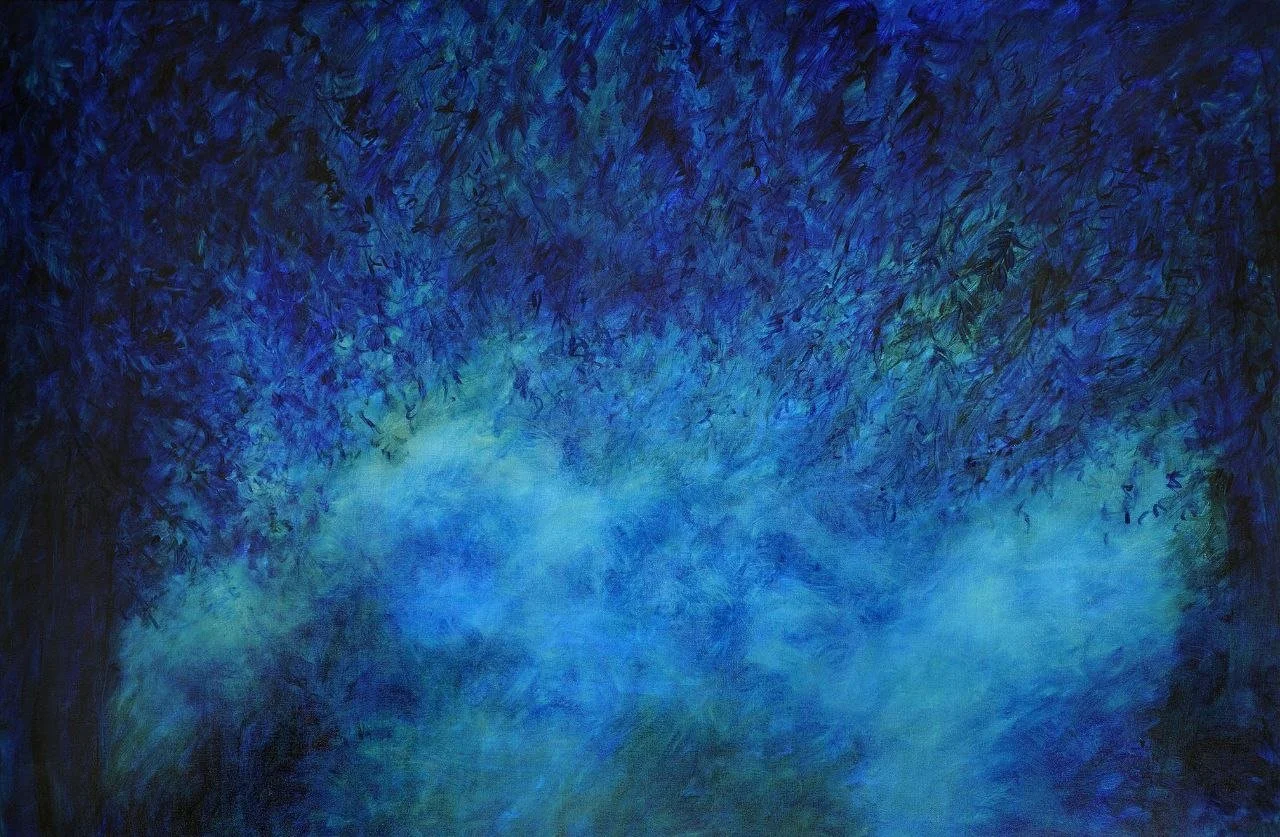
Hooshyar Khayam ~ Royâ
رویا
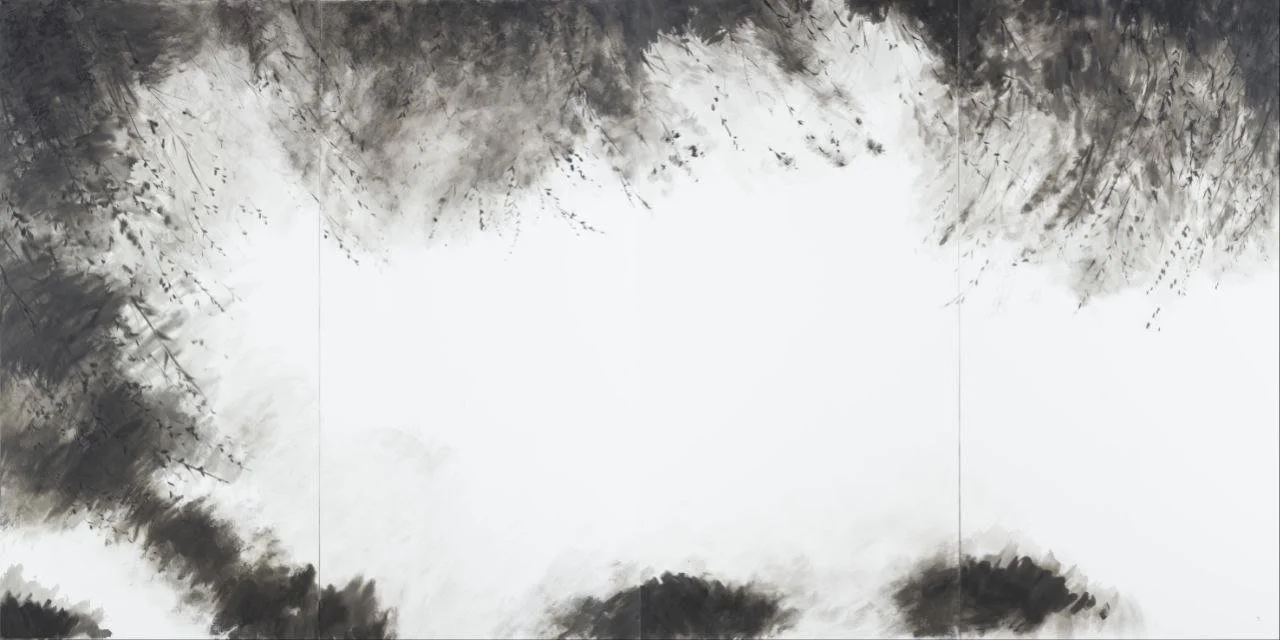
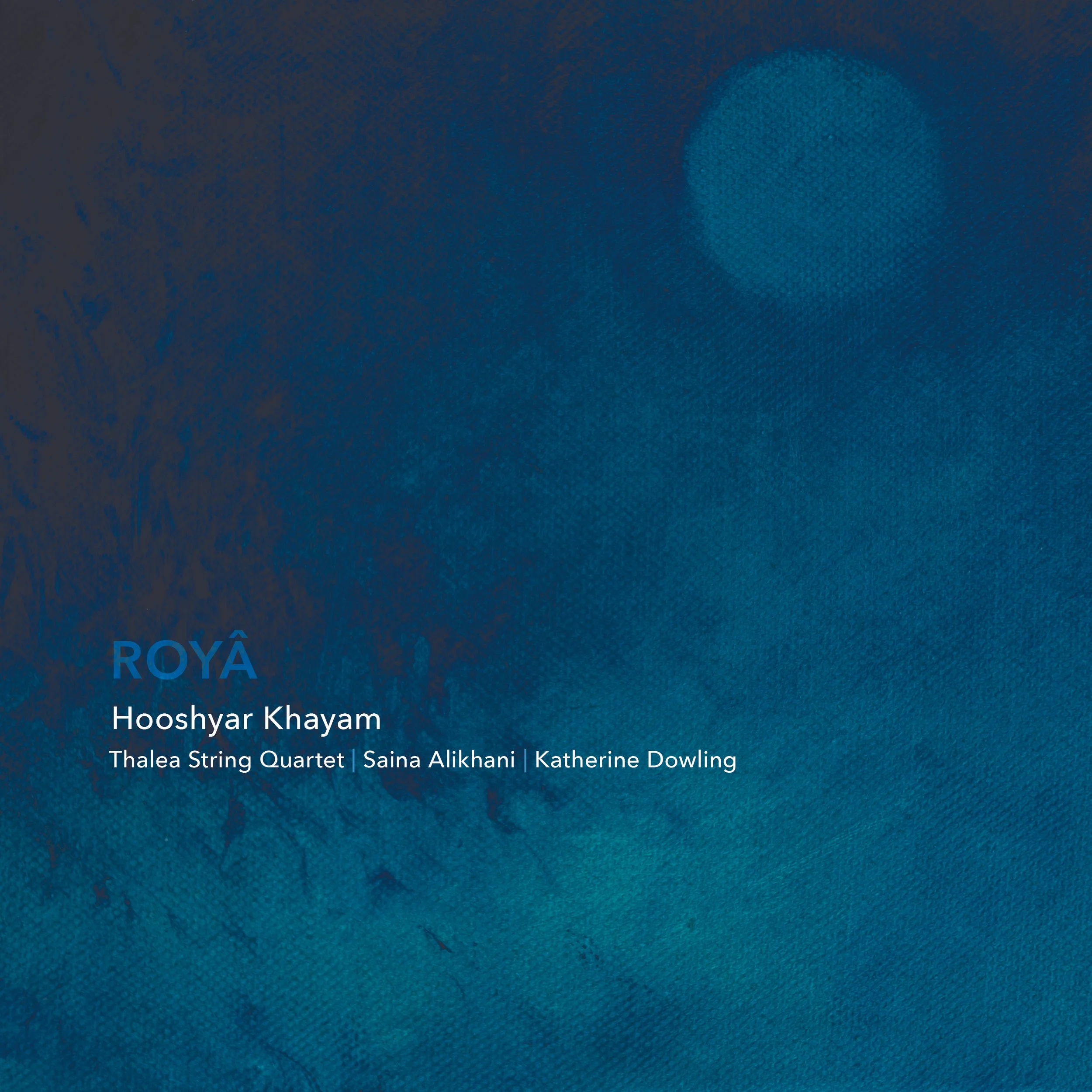
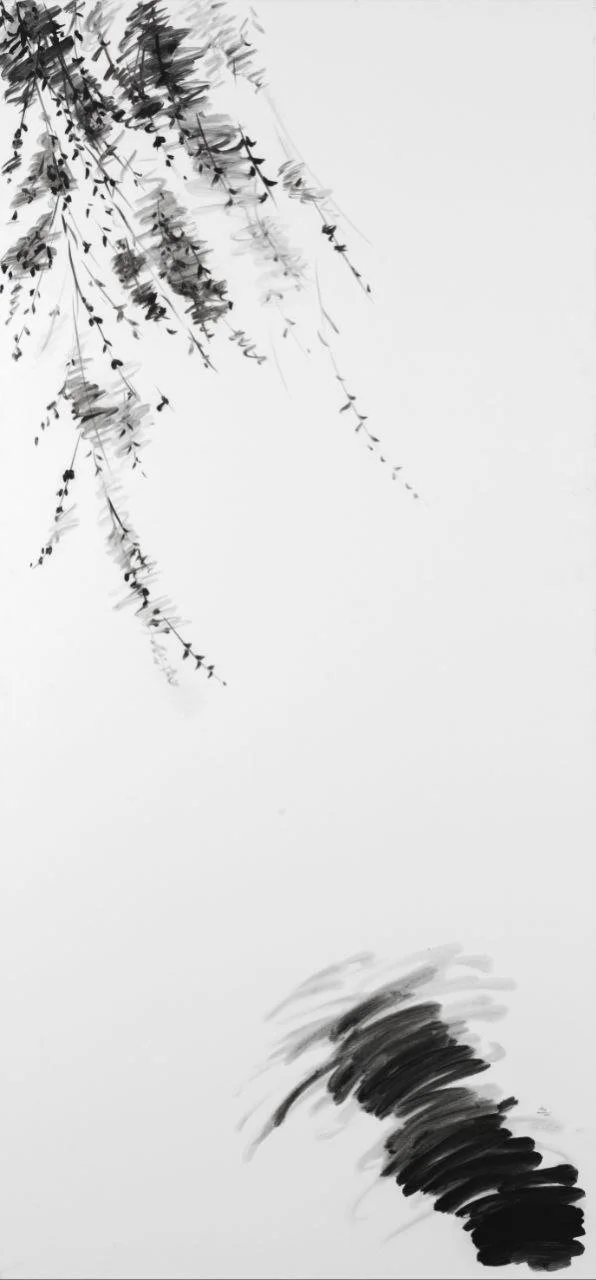
Album Artwork by Pariyoush Ganji
For Khayam, this musical landscape emerged gradually rather than through a predetermined compositional design. The music grew from an accumulation of impressions—childhood memories shaped by war, displacement and migration, the poetry of Omar Khayyam, and the luminous paintings of Iranian artist Pariyoush Ganji, whose work became an important visual companion throughout the composition of the album. Like Ganji's paintings, these works seem suspended between reality and dream, between presence and disappearance.
Yet Royâ is not a memoir. Rather than recounting personal history directly, it transforms lived experience into emotional landscape. Migration is heard not as geographical movement but as a continual negotiation between memory and belonging. Dreams become places where distant times coexist, where absent people remain present, and where fragments of identity continue to speak across generations.
If these themes begin with the composer, they ultimately belong to everyone who encounters the music.
COMING SOON:






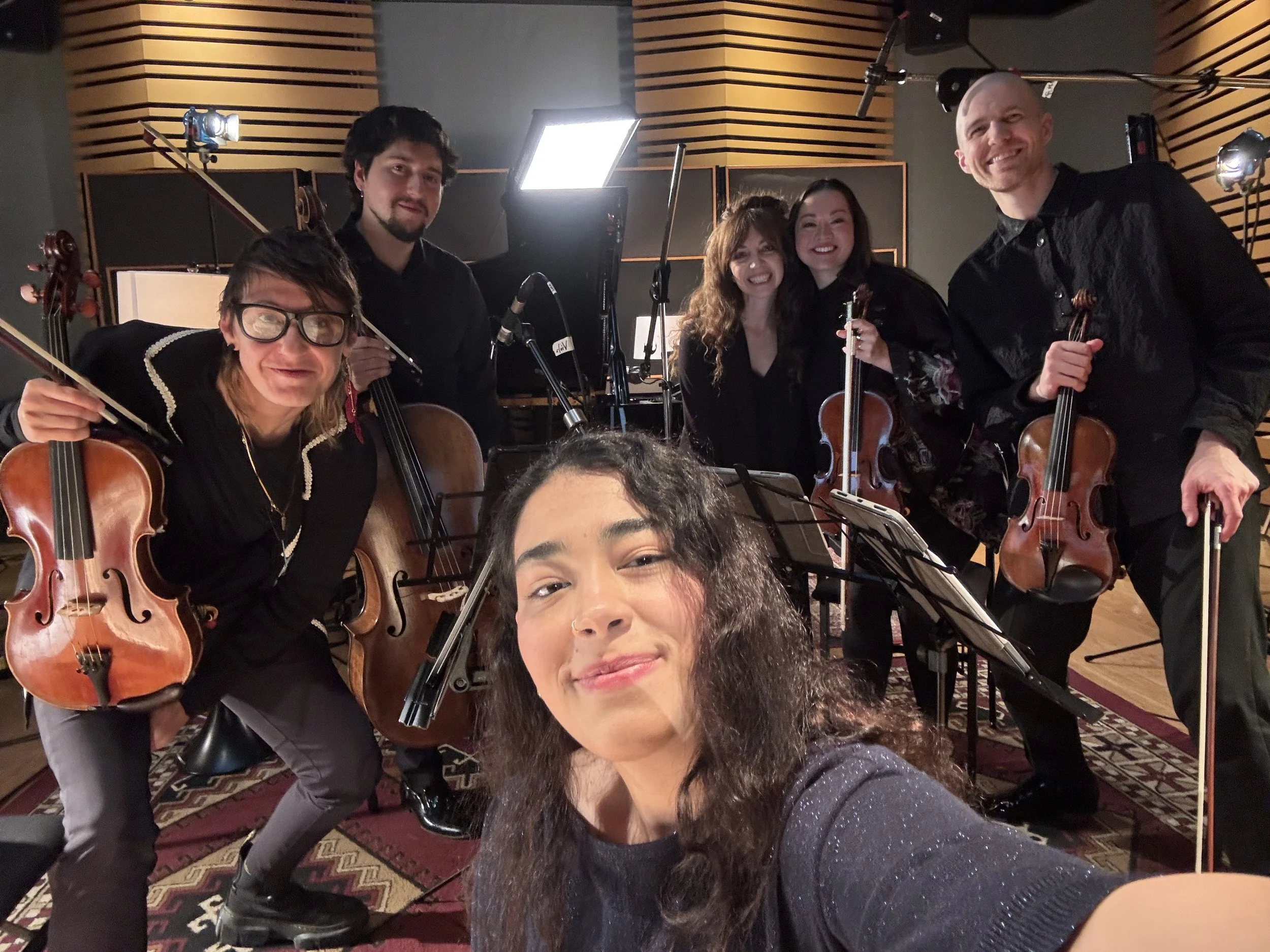
During the recording sessions, the performers immediately found themselves inside Khayam's musical world. Rather than approaching Royâ as an abstract contemporary work, the ensemble experienced it as something immediately human—a musical language whose emotional landscape required little explanation. Listening soon became something more than interpretation. It became recognition.
That recognition extended beyond the music itself. Reflecting on the experience of performing Royâ, Thalea Quartet violinist Kumiko Sakamoto spoke of connecting with its themes "on the standpoint of immigration and displacement," recalling "[her] own family's experience [across] different generations, thinking of all the people in [one's] life that aren't [together], but might have been if things would be different." Although Khayam's music grows from deeply personal memories, the performers discovered that its emotional truths belonged equally to their own histories. "I connect to this on a musical level and a personal level," Sakamoto continues, "and it's really easy to empathize with the story of Royâ... Hooshyar makes that such a visceral experience."
Royâ never asks listeners to enter someone else's memories.
Instead, it gently awakens their own.

Like dreams themselves, these eleven movements resist conventional narrative. Instead, each offers a different window into a shared emotional landscape.
Part I – Qazal
Sabâ (Wind) صبا
The album opens almost imperceptibly. Sabâ, named after the gentle eastern wind of Persian poetry, arrives like the first breath before waking. Rather than establishing musical direction, it opens a space of possibility. Time seems suspended; memory has not yet chosen its shape.
Qazal (Words) غزل
The title movement of the first cycle reflects upon poetry itself. Throughout Persian literature, the ghazal becomes a place where love, longing, philosophy, and spiritual searching coexist. Khayam responds not by illustrating poetry, but by allowing instrumental voices to sing with the flexibility and inflection of language itself. Musical phrases feel spoken, interrupted, remembered, and rediscovered.
Moaj (Waves) موج
Movement becomes memory. Like waves returning endlessly to shore, musical ideas rise and recede without exact repetition. Rather than development in the classical sense, Moaj embraces recurrence, suggesting that remembrance is never fixed but continually reshaped each time it returns.
Ghobâr (Dust) غبار
Dust carries profound symbolism throughout Persian poetry: it represents mortality, disappearance, and transformation. Here the quartet's sound becomes astonishingly delicate, as though the music itself risks dissolving into silence. Yet disappearance never signifies absence. Even what vanishes leaves traces behind.
Rend (Awakened) رند
In Persian literature, the rend is the enlightened wanderer who rejects certainty in favour of wisdom born through experience. Khayam captures this spirit through music that balances freedom with restraint, allowing moments of luminous clarity to emerge unexpectedly before disappearing once again into uncertainty.
Zamân (Time) زمان
Time in Royâ is never simply chronological. Past and present coexist, memories interrupt the present moment, and dreams collapse linear experience altogether. The closing movement of the first cycle offers no conclusion but instead opens the door toward another world.
It feels like memory finding language. After six movements in which the string quartet alone evokes atmosphere and remembrance, Omar Khayyam's poetry finally emerges, waiting to be heard. For soprano Saina Alikhani, whose own artistic life has long been shaped by Persian poetry, the collaboration felt deeply personal. Her voice does not merely sing Khayyam's verses; it carries the weight of lived experience, allowing poetry written nearly a thousand years ago to speak with remarkable immediacy.
Part II – Royâ
The second half expands the quartet's sound through the addition of piano and soprano, allowing Omar Khayyam's poetry to enter directly into the musical landscape. Voice does not explain the instrumental music; rather, it emerges naturally from it, as though words had always been present beneath the surface.
Mâh (Moon) ماه
The moon has occupied Persian poetry for centuries as a symbol of beauty, longing, and eternal return. Here its presence is gentle rather than dramatic. Katherine Dowling's luminous piano and Saina Alikhani's expressive vocal line create an atmosphere suspended between earthly memory and celestial distance.
Meh (Mist) مه
Mist obscures without erasing. Musical textures drift in and out of focus, suggesting memories only partially recovered. The boundaries between voice and instruments become increasingly fluid, as though sound itself were dissolving into atmosphere.
Rooz (Day) روز
If previous movements inhabit twilight, Rooz offers light without certainty. Omar Khayyam's poetry encourages us to embrace the present moment precisely because it cannot last. Khayam's setting captures both joy and impermanence, allowing brightness to exist alongside quiet melancholy.

Abr (Cloud) ابر
Clouds become symbols of continual transformation. They gather, disperse, and reform, much like memory itself. The movement unfolds in long, breathing phrases whose emotional weight comes not from dramatic climax but from patient unfolding.
Royâ (Dream) رویا
The final movement gathers the album's emotional threads into its most expansive statement. Dreams are no longer simply remembered; they become places where past and present, absence and presence, homeland and exile coexist. Rather than offering resolution, the music leaves listeners suspended between worlds, suggesting that dreams continue long after waking.
As Khayam reflected, "I hope that people... will carry something from their own dreams out of this album... it's that living of the dream every day in our lives. To be a dreamer, to be dream-walking."
… the recording sessions became less an assembly of individual artists than a community gathered around a shared artistic vision.
Perhaps this spirit explains why the performances possess such uncommon intimacy. Rather than presenting polished surfaces, the musicians inhabit the music's silences, fragile textures, and suspended sense of time with extraordinary trust. Listening becomes less an act of observation than one of participation.
Royâ becomes more than an album. It becomes a place of meeting—between Persian poetry and contemporary music, between painting and sound, between composer and performer, and ultimately between strangers who recognize something of themselves in one another's stories.
Like the dreams from which it takes its name, Royâ lingers after the final notes fade, showing us that our lives are shaped not only by where we have been, but also by the imagined worlds we continue to carry within us.
That phrase—dream-walking—may be the most fitting description of Royâ. These works invite us not to escape the world, but to move through it differently: carrying memory without becoming imprisoned by it, embracing impermanence without despair, and discovering in our own dreams the possibility of connection with others.
SHOP
Hooshyar Khayam
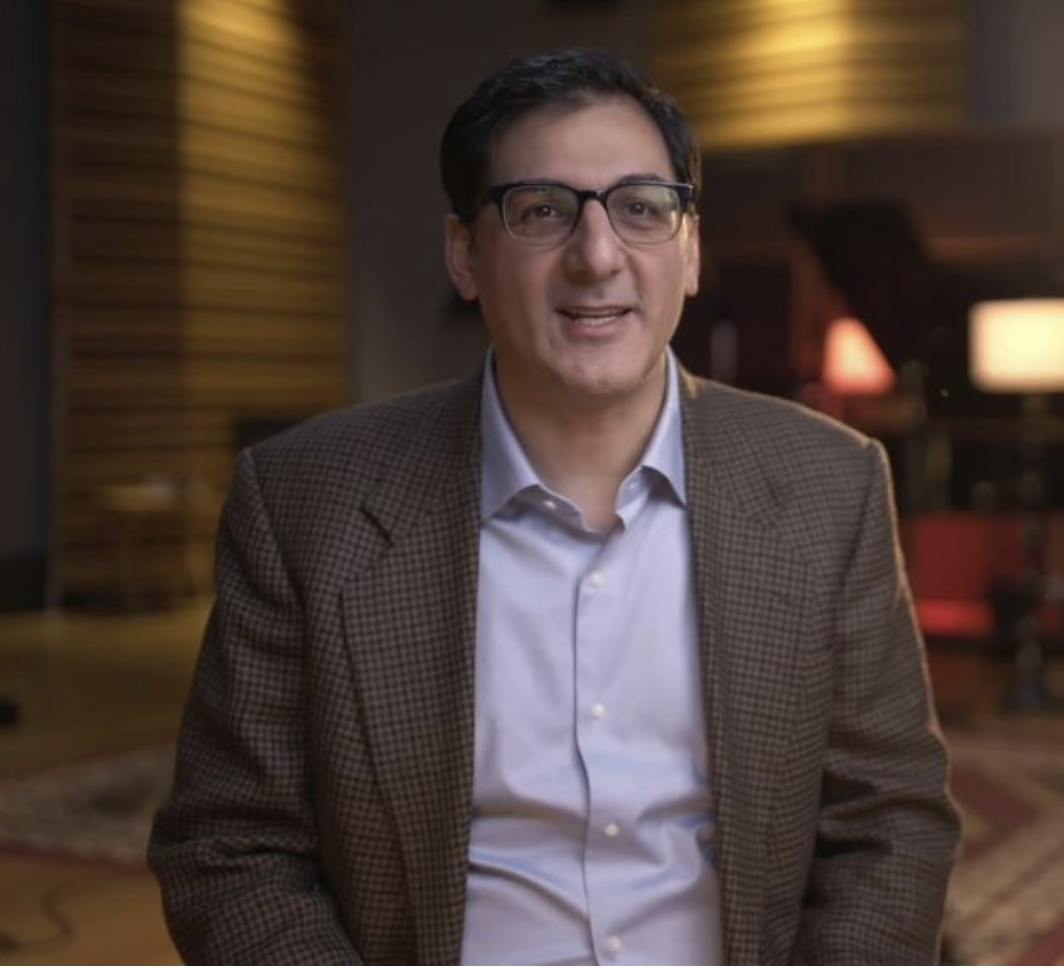
Hooshyar Khayam is an Iranian, Canadian composer, pianist, and conductor whose music is shaped by lyricism, timbral imagination, and a deeply personal intercultural voice. Inspired by Persian poetry, improvisation, painting, and contemporary classical traditions, his works move between intimacy and vast sonic landscapes. Past projects include music for Monir featuring the Kronos Quartet, as well as works performed by Hossein Alizadeh and the Ukraine Philharmonic Orchestra. Recent projects include Royâ (Phenotypic Recordings), Symphonie des Dômes for chamber ensemble, and the violin concerto Pharos. His music has been performed across North America and Europe by artists Barbara Hannigan, Diana Cohen, and Mishka Momen, among others, and ensembles including the Gothenburg Symphony Orchestra Chamber Series, Thirteen Strings Orchestra, ChamberFest Cleveland, and the Canadian Golha Orchestra.
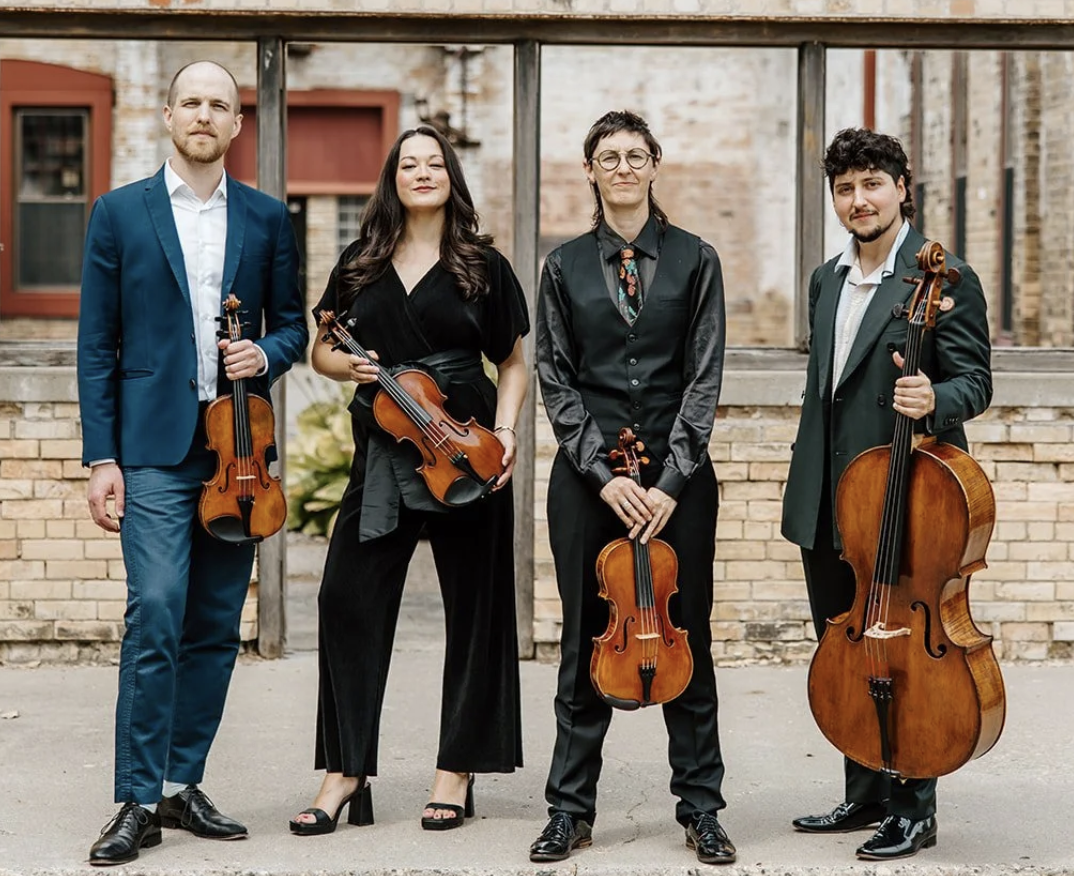
Thalea String Quartet
The Thalea String Quartet brings vibrancy and emotional commitment to dynamic performances that reflect the past, present, and the future of the quartet repertoire while celebrating diverse musical traditions from around the world. Fueled by the belief that chamber music is a powerful force for building community and human connection, the Thalea String Quartet has performed across North America, Europe, and China. They have performed alongside celebrated artists including composer Caroline Shaw, violist Lawrence Power, and acclaimed band BADBADNOTGOOD. Committed to shaping the future of the string quartet repertoire, the Thalea String Quartet has premiered dozens of new works and has collaborated on new commissions with composers including Osvaldo Golijov, Paola Prestini, Anthony R. Green, Akshaya Avril Tucker, and Andrew Yee.
Katherine Dowling
Praised by The New York Times for her “crystalline performances, gestural expressiveness, and careful attention to color”, pianist Katherine Dowling performs across the Americas and Europe. Katherine is familiar to audiences through regular appearances at Canada’s major music festivals and concert series, including Ottawa Chamberfest and Stratford Summer Music. Recently she’s made recital debuts in Vienna, The Hague, and Rio de Janeiro. She has premiered over one hundred new works. Her debut solo album “Awake and Dreaming” was nominated for “Classical Album of the Year (Solo Artist)” at the JUNO Awards. Her performances have been broadcast on the BBC, National Radio 4 (Netherlands), CBC, and Radio Canada.

Saina Alikhani
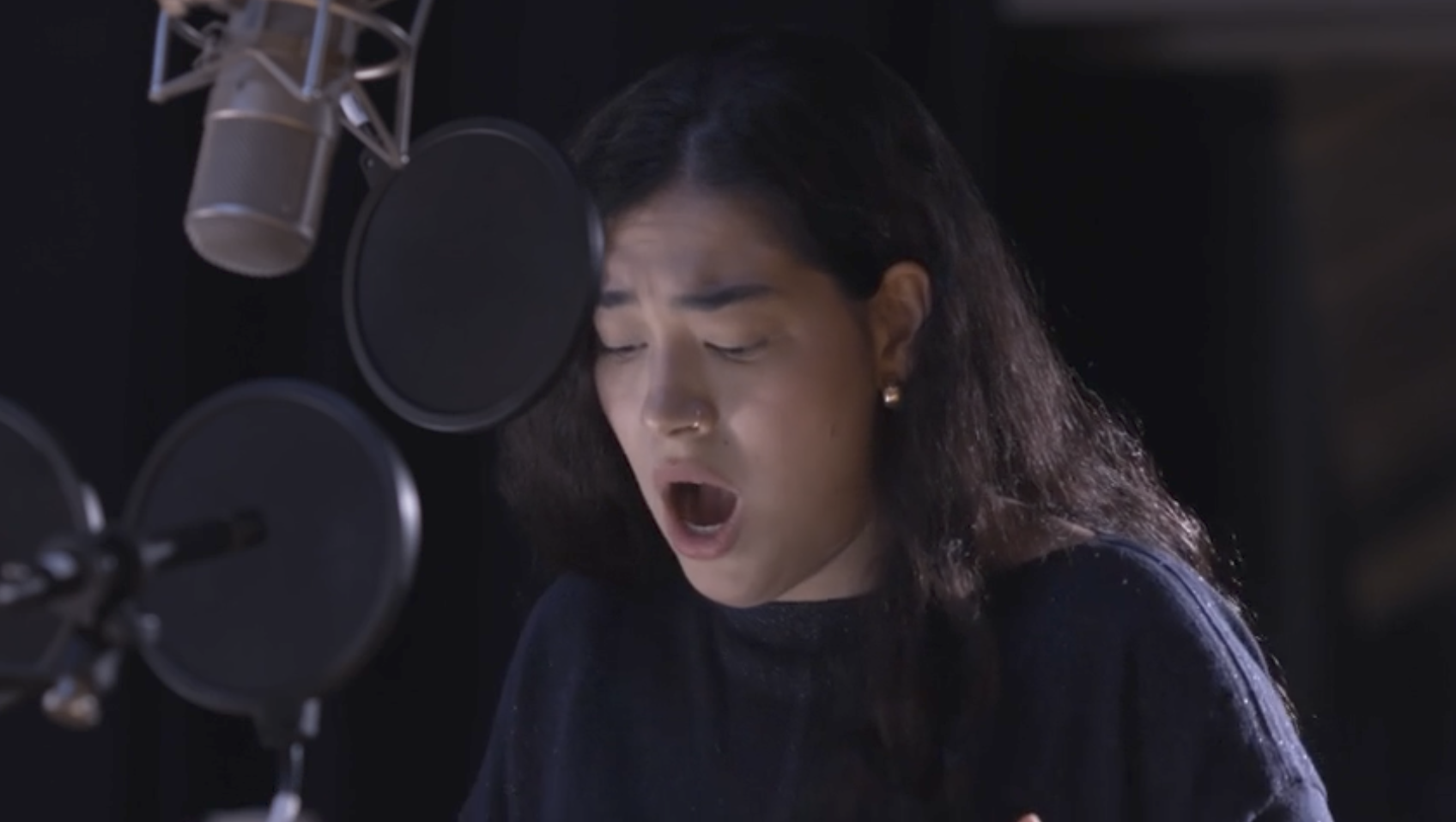
Saina Alikhani is an Iranian soprano based in Montréal who grew up in a literary household, surrounded by storytelling. Her love of poetry led her to art song, and bringing poetry to life through voice has become a central part of her artistic identity. Her work brings together opera, art song, contemporary music, and a growing commitment to contemporary Persian music. She recently performed contemporary Persian repertoire with the JAM Orchestra at the University of Toronto New Music Festival. In addition to the multidisciplinary theatre production VIRAN (The Destroyed) in Montréal, Saina’s operatic appearances include the title role in Dido and Aeneas with Ensemble Bonaventure, Jo March in Little Women at the Vienna Summer Music Festival, and appearances at the Conservatoire de musique de Montréal.
ALBUM INFORMATION
Album Title: Royâ رویا
Composer: Hooshyar Khayam:
Artists:
Thalea String Quartet (Christopher Whitley, violin; Kumiko Sakamoto, violin; Lauren Spaulding, viola; Alexander Cox, cello)
Katherine Dowling, piano
Saina Alikhani, soprano
Hooshyar Khayam dedicates this Royâ recording project to Nima.
With special thanks to Dariush Gorgvand, Mina Arissian, Stephen Prutsman, and Sheida Marashi, without whom this work would not have been possible.
-
Part I: “Qazal” (for string quartet)
1. Sabâ (Wind) صبا 2:25
2. Qazal (Words) غزل 6:18
3. Moaj (Waves) موج 5:44
4. Ghobâr (Dust) غبار 2:28
5. Rend (Awakened) رند 2:50
6. Zamân (Time) زمان 3:34
Part II: “Royâ” (for string quartet, piano, and voice)
7. Mâh (Moon) ماه 6:00
8. Meh (Mist) مه 2:22
9. Rooz (Day) روز 2:50
10. Abr (Cloud) ابر 6:03
11. Royâ (Dream) رویا 10:46
-
Royâ Liner Notes
-
Production Credits
Recording, Mixing & Master Engineer: Pouya Hamidi
Producer: Stephen Prutsman
Editing: Hooshyar Khayam and Stephen Prutsman
Original Artwork: Pariyoush Ganji, "Moon", Oil on canvas, 2025
Art Direction & Graphic Design: Christopher Kornmann for Spit + Image
Recording Location: Noble Street Studios, 17 Noble Street, Toronto, ON M6K 2C7
Dates of Recording: December 10, 11, 12, 2025
© 2026 Phenotypic Recordings
All rights reserved
LISTEN:
Works on Royâ
-
Drink wine—
for eternal life is here, and nowhere else:
the small reward
of youth before it passes.While blossoms open,
while wine is poured,
while friends are near,
be glad—
for life is nothing but this. -
Last night
I went into the potter’s workshop.
There I saw
two thousand jars —
some speaking,
some silent.
And each one,
in the language of its own being,
said to me:
Where is the potter?
Where is the buyer of pots?
Where is the seller?
-
Life slips away
like water in a stream—
no one can hold it,
no one can make it stay.Drink wine—
for the dust you walk upon
was once the face
of someone loved and beautiful. -
All around us—
above, below, within, without—
is nothing but a shadow play.The sun lights the stage,
and we, the passing ghosts—
enter for a moment
and then, off the stage. -
The moving pen writes,
and once it has written,
moves on.No prayer, no wisdom
can call it back
to erase half a line;
No tears can wash away
a single phrase. -
The wheel of time turns,
we come, and we go.
We know nothing,of its beginning or its end.
No one can tell us,
no one can say:
Where did we come from,
where do we go?
-
Look—
In the morning, a thousand blossoms wake,
by evening, a thousand fall back into clay.Think of this worn caravanserai,
whose two doorways Night and Day:
So many sultans, with all their glory,
stayed here for a moment or two,
and then, went on their way. -
This cup once knew love’s sorrow,
caught in the beloved’s curling hair—
where every curl becomes a rope
made to bind the lover’s heart.This handle, curved against its rounded body,
was once an arm
holding a beloved close.این کوزه چو من عاشق زاری بوده است
در بند سر زلف یاری بوده است
این دسته که بر گردن او می بینی
دستی است که بر گردن یاری بوده است -
What a joyful day—
The air is gentle, neither hot nor cold.
A passing cloud cleans the dust
from the garden’s golden face.The nightingale, singing in the old tongue,
calls to the yellow rose:
“Bring wine—
for wisdom wakes with the cup.”روزی است خوش و هوا نه گرم است و نه سرد
ابر از رخ گلزار همی شوید گرد
بلبل به زبان پهلوی با گل زرد
فریاد همی کند که می باید خورد -
The cloud wept over the grass:
“Bring wine,” it whispered,“for this life will not return.”
This tender green earth
that pleases our eyes todaywill one day spring from us,
when we are no longer here.ابر آمد و زار بر سر سبزه گریست
بی باده گلرنگ نمی باید زیست
این سبزه که امروز تماشاگه ماست
تا سبزه خاک ما تماشاگه کیست -
No one holds tomorrow in their hand,
so ease your restless heart today.
Drink beneath the moonlight, my moon-face friend—
the moon will return,and it will not find us here.
چون عهده نمی شود کسی فردا را
حالی خوش کن تو این دل شیدا را
می نوش به ماه ای ماه
که ماه بسیار بتابد و نیابد ما را