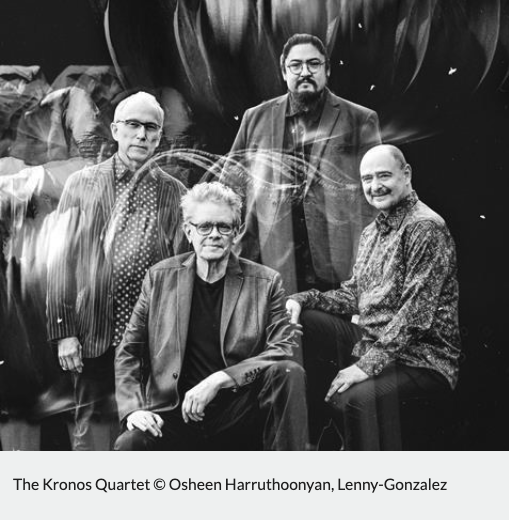
KRONOS QUARTET
Forgive Us For
Forgive Us For captures Kronos Quartet at its most urgent and human. Journeying through Palestine, Iceland, and Ukraine, the album amplifies voices of mercy, exile, and survival in works by Rim Banna, Hildur Guðnadóttir, and Mariana Sadovska. Each composition transforms personal and collective trauma into transcendent sound, affirming that music can both bear witness and heal.
Forgive Us For
Kronos Quartet
DIGITAL ALBUM OUT NOW
RELEASE SCHEDULE
October 17, 2025: Single #1: Rim Banna, Ya Taali'een el-Jabal (arr. Jonathan Berger) + CD & LP pre-sale begins
November 14, 2025: Single #2: Hildur Guðnadóttir, Fólk fær andlit
December 5, 2025: Full album (digital) - Forgive Us For







DIGITAL ALBUM OUT NOW
KRONOS QUARTET ~ Forgive Us For
When Kronos Quartet celebrated its 50th anniversary in 2023, founding first violinist David Harrington vowed to keep building on the group’s globe-spanning repertoire and spirit of social activism, especially when it comes to premieres.
Kronos’s newest release, Forgive Us For, makes good on this pledge, with three works that address crises and troubles around the globe: by Icelandic composer Hildur Guðnadóttir, Ukrainian singer Mariana Sadovska, and the late Palestinian singer Rim Banna (in an arrangement by Jonathan Berger).
Expanding the group’s legacy of global collaboration and spirit of social activism, Forgive Us For addresses some of the most urgent crises and troubles worldwide. The first single, “Ya Taali'een el-Jabal” (“Oh, You Who Are Climbing Up the Mountain”), performed by the late Palestinian singer Rim Banna (1966-2018), in an arrangement by Jonathan Berger, emulates the Palestinian women who have traditionally sung the folk song to their imprisoned husbands to convey messages of freedom and liberation.
Originally composed for cello (played by Guðnadóttir) and a polyphony of voices that repeatedly intone the Icelandic words miskun (mercy) and fyrirgefið okkur fyrir (forgive us for), Kronos reimagines “Fólk fær andlit” (“People Get Faces”) through their ever-forward thinking string quartet arrangement. The piece recounts a harrowing 2015 episode which saw the Icelandic government deport a group of Albanian families—including one with a critically ill child—in the middle of the night. Kronos renders the haunting vocal lines with sacred presence and solemnity.
Also found in the collection is Ukrainian singer Mariana Sadovska’s “Chernobyl. The Harvest,” dedicated to the previous occupants of the now uninhabitable cities and villages abandoned after the 1986 nuclear reactor disaster. Based on harvest songs and other folk melodies that Sadovska gathered in Ukraine’s Polissia region, the song’s texts are intertwined with evacuation announcements from Chernobyl.
Kronos cellist Paul Wiancko reflects, “There’s a unifying pain and struggle to these stories that are otherwise very different,” he explains. “They shed light on a part of humanity that we so deeply need to focus on in 2025 and beyond.”
Read more in Album Information & Artists Notes below
SINGLE: Hildur Guðnadóttir, Fólk fær andlit
The album’s title is a line from Hildur Guðnadóttir’s Fólk fær andlit (“People Get Faces”), originally scored for a women’s choir with cello, and presented here in a new string quartet arrangement. The piece concerns a troubling episode that drew little notice outside Guðnadóttir’s native Iceland. In 2015, the government deported a group of Albanian families, including one with a critically ill child, in the middle of the night. Guðnadóttir treats the subject with an austere solemnity, in keeping with her experience in film and TV scoring (Joker, Chernobyl, TAR).
From Interview with David Harrington and Paul Wiancko of Kronos Quartet:
Hildur Guðnadóttir’s Fólk fær andlit was originally scored for women’s voices and cello and featured the lyrics, “Mercy / Forgive us for.” How did this instrumental version proceed in terms of a dramatic arc?
David: When I first heard Hildur’s piece, I actually thought she wrote it especially for Kronos. It just felt like a perfect extension of our work sonically. For those people who have heard us play it, most recognize it as an earworm kind of piece. Once you hear Fólk fær andlit you can’t get it out of your imagination. I’ve always been attracted to music like that, which has an iconic sensibility. What we discovered in the recording was that we could color each layer infinitely.
Some listeners will have been introduced to Guðnadóttir through her TV and film scores. Do you hear a “cinematic” approach to storytelling here?
Paul: I think there’s a priority you can hear in her music: the directness of the emotion and how to communicate an important and disturbing historical narrative about refugee treatment in Iceland. [She understands] what kind of music might allow the listener to be able to quickly focus and meditate on that for five or six minutes. That’s really something unique and amazing: just how quickly she can get someone in the right mindset to think about something so serious.
Read more in Album Information - Artist Notes below
SINGLE: Rim Banna, Ya Taali'een el-Jabal (arr. Jonathan Berger)
A recording of the late Palestinian singer Rim Banna, presented in an arrangement of the folk song Ya Taali’een el-Jabal (“Oh, You Who Are Climbing Up the Mountain”). Palestinian women have traditionally sung this to their imprisoned husbands to convey messages of freedom and liberation. Banna, who died from cancer in 2018, dedicated it to Palestinian political prisoners held in Israeli jails.
From Interview with David Harrington and Paul Wiancko of Kronos Quartet:
The opening track, Ya Taali’een el-Jabal, couldn’t be more timely. It features a recording by Palestinian singer Rim Banna in a new arrangement by American composer Jonathan Berger. What was it about this that captured your attention?
David: Jonathan brought the idea of this song to us, and I immediately said yes. This is something we want to do. Rim Banna came to the attention of the music world by Erik Hillestad, the producer of one of our album Placeless. During Rim Banna’s lifetime, Erik produced seven of her albums. After she died in 2018, he stayed in contact with her family. It was with their permission that we were able to get access and record this. It was taken from a television show.
It’s a song about a woman singing outside a mountaintop prison where her husband is being held. Does that story inform your approach in some way?
Paul: I think it does. It’s only a 90-second piece but when we play, I find my mind and my heart are completely flooded with emotion and thoughts. I wish it were longer. Here’s hoping that we can continue to grow the Palestinian part of our repertoire as well, because there’s a bit of a shortage of music in this country that has Palestinian roots and influences. To be able to be a platform for Palestinian culture in music is especially important to Kronos.
Read more in Album Information - Artist Notes below
SHOP
Kronos Quartet ~ Forgive Us For
DIGITAL ALBUM
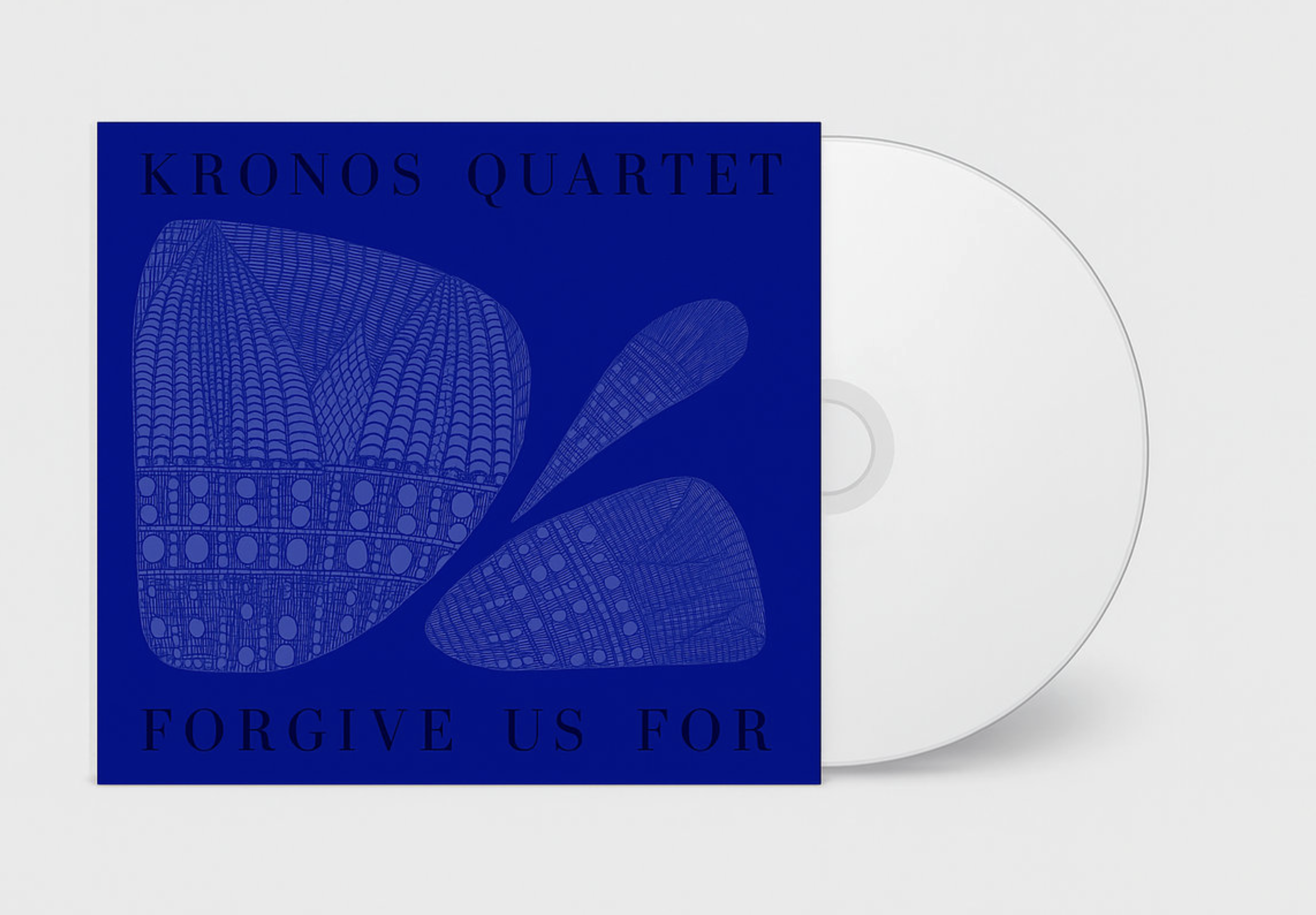
Kronos Quartet ~ Forgive Us For
CD
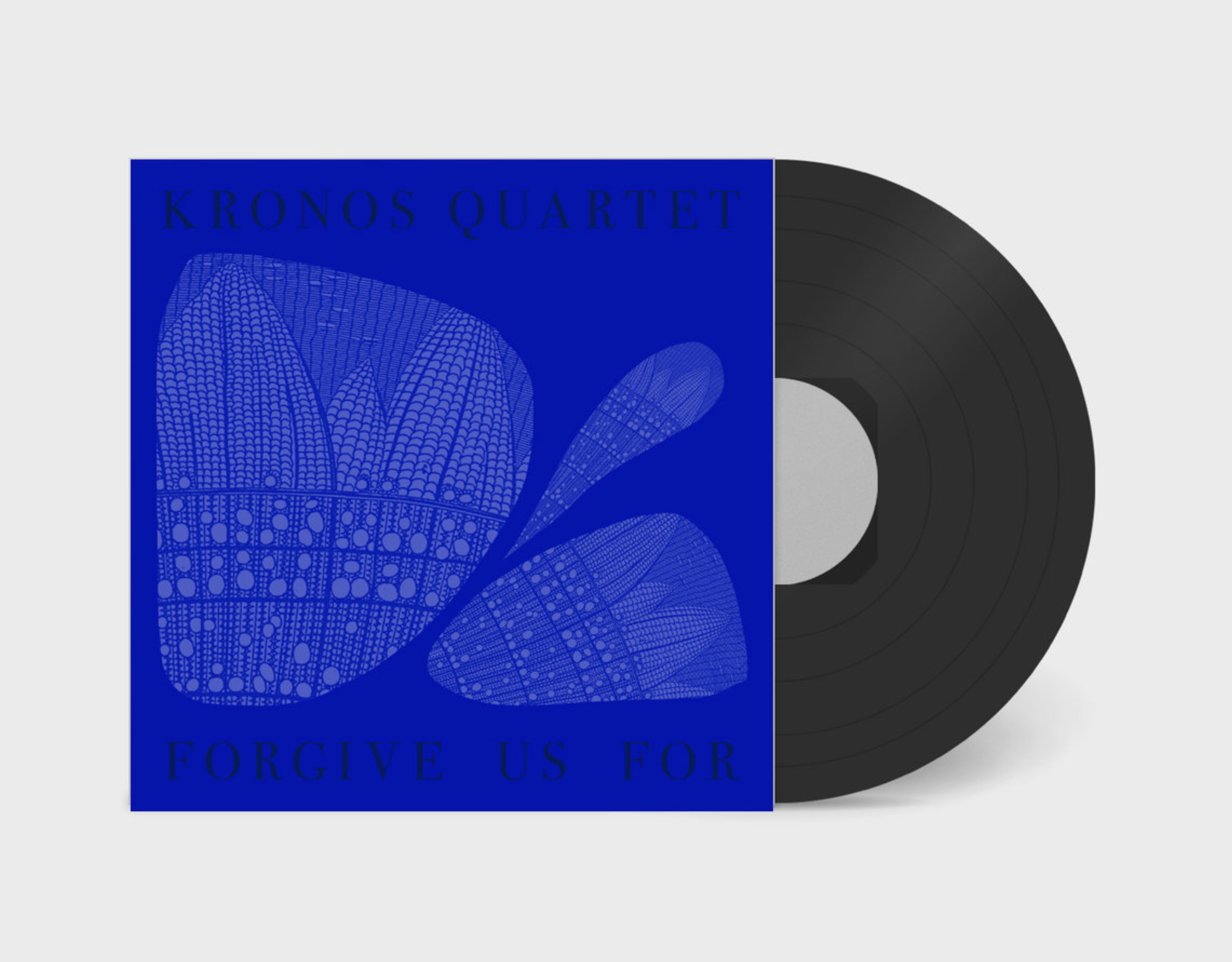
Kronos Quartet ~ Forgive Us For
LP
Album Information
TITLE: Forgive Us For
ARTISTS: Kronos Quartet
SUMMARY: Forgive Us For captures Kronos Quartet at its most urgent and human. Journeying through Palestine, Iceland, and Ukraine, the album amplifies voices of mercy, exile, and survival in works by Rim Banna, Hildur Guðnadóttir, and Mariana Sadovska. Each composition transforms personal and collective trauma into transcendent sound, affirming that music can both bear witness and heal.
CREDITS:
Ya Taali'een el-Jabal: Traditional (Palestinian) | Arranged by Jonathan Berger | Performed by Kronos Quartet and Rim Banna (Kronos Quartet: David Harrington, violin; Gabriela Díaz, violin; Ayane Kozasa, viola; Paul Wiancko, cello) | Recorded December 18, 2024 at 25th St. Recording, Oakland, CA |Producer: Jeanne Velonis | Engineer: Zach Miley | Assistant Engineer: Karishma Kumar
Editing and Mixing: Jeanne Velonis | Translation: Shaimaa Abulebda
Fólk fær andlit : Composed by Hildur Guðnadóttir | Arranged by Kronos Quartet and Jeanne Velonis | Performed by Kronos Quartet (David Harrington, violin; Gabriela Díaz, violin; Ayane Kozasa, viola; Paul Wiancko, cello) |Recorded December 20, 2024 at 25th St. Recording, Oakland, CA |Producer: Jeanne Velonis |Engineer: Zach Miley |Assistant Engineer: Karishma Kumar |Editing and Mixing: Jeanne Velonis
Chernobyl. The Harvest : Composed by Mariana Sadovska | Commissioned for the Kronos Quartet by Janet Kutulas, Peter Simcich, Shira Cion, Lessia and Rick Jarboe, and KAMENSKAKONONOVA | Performed by Kronos Quartet and Mariana Sadovska (Kronos Quartet: David Harrington, violin; John Sherba, violin; Hank Dutt, viola; Paul Wiancko, cello) | Recorded January 25, 2024 at Hyde Street Studios, San Francisco, CA | Producer: Reshena Liao | Engineer: Scott Fraser | Assistant Engineer: Eric Glauser |Editing and Mixing: Scott Fraser at Architecture
Mastering: Jeanne Velonis
Cover Art and Album Design: Ariel Aberg-Riger
Album Notes: Ted Levin
Phenotypic Recordings: Founder & CEO: Michael Hostetler; Creative Director: Stephen Prutsman;Project Manager: Mary Paz Cubero Navarro
Kronos Performing Arts Association:Managing Director: Ann-Marie Daniels; Associate Director: Mason Dille;Manager, Artistic Operations & Touring: Jackie Power;Coordinator, Artistic Operations & Media: Graham Keeton
-
TRACK 1. Ya Taali'een el-Jabal [1:58]
Traditional (Palestinian) arr. Jonathan Berger
Performed by Kronos Quartet featuring the pre-recorded vocals of Rim Banna
TRACK 2. Fólk fær andlit [5:12]
Hildur Guðnadóttir arr. Kronos Quartet and Jeanne Velonis
Performed by Kronos Quartet TRACK 3. Chernobyl. The Harvest [25:07]
Mariana Sadovska
I. Doroha. Дорога (The Road) dedicated to Ludmyla Ignatenko [8:35]
II. Zhnyva. Жнива (The Harvest) [3:21]
III. Platch. Плач (Lamentation) [8:15]
IV. Rai. Рай (Paradise) [5:05]
Performed by Kronos Quartet and Mariana Sadovska, vocals & harmonium
-
-
Forgive Us For - Liner Notes
-
-
“The aim is to bring people elsewhere closer to the music and soul of the Palestinians.”
— Rim Banna on “Ya Taali'een el-Jabal”
"“I just thought this music has to be heard…The state of the world demands it.”
- David Harrington of the Kronos Quartet

KRONOS QUARTET
David Harrington, violin | Gabriela Díaz, violin | Ayane Kozasa, viola | Paul Wiancko, cello *
* On Chernobyl. The Harvest: John Sherba, second violin & Hank Dutt, viola
For 50 years, San Francisco’s Kronos Quartet has reimagined what the string quartet experience can be. One of the most celebrated and influential groups of our era, Kronos has given thousands of concerts worldwide, released more than 70 recordings, and collaborated with many of the world’s most accomplished composers and performers across many genres. Kronos has received more than 40 awards, including three Grammys and the Polar Music, Avery Fisher, and Edison Klassiek Oeuvre Prizes. In 2024, Kronos’ Pieces of Africa album was inducted into the National Recording Registry at the Library of Congress. Through its nonprofit organization, Kronos Performing Arts Association (KPAA), Kronos has commissioned more than 1,100 works and arrangements for quartet. KPAA also manages Kronos’ concert tours, local performances, recordings, and education programs, and produces an annual Kronos Festival in San Francisco. In its most ambitious commissioning effort to date, KPAA has recently completed Kronos Fifty for the Future. Through this initiative, Kronos has commissioned — and distributed online for free — 50 new works for string quartet designed for students and emerging professionals, written by composers from around the world.
COMPOSERS
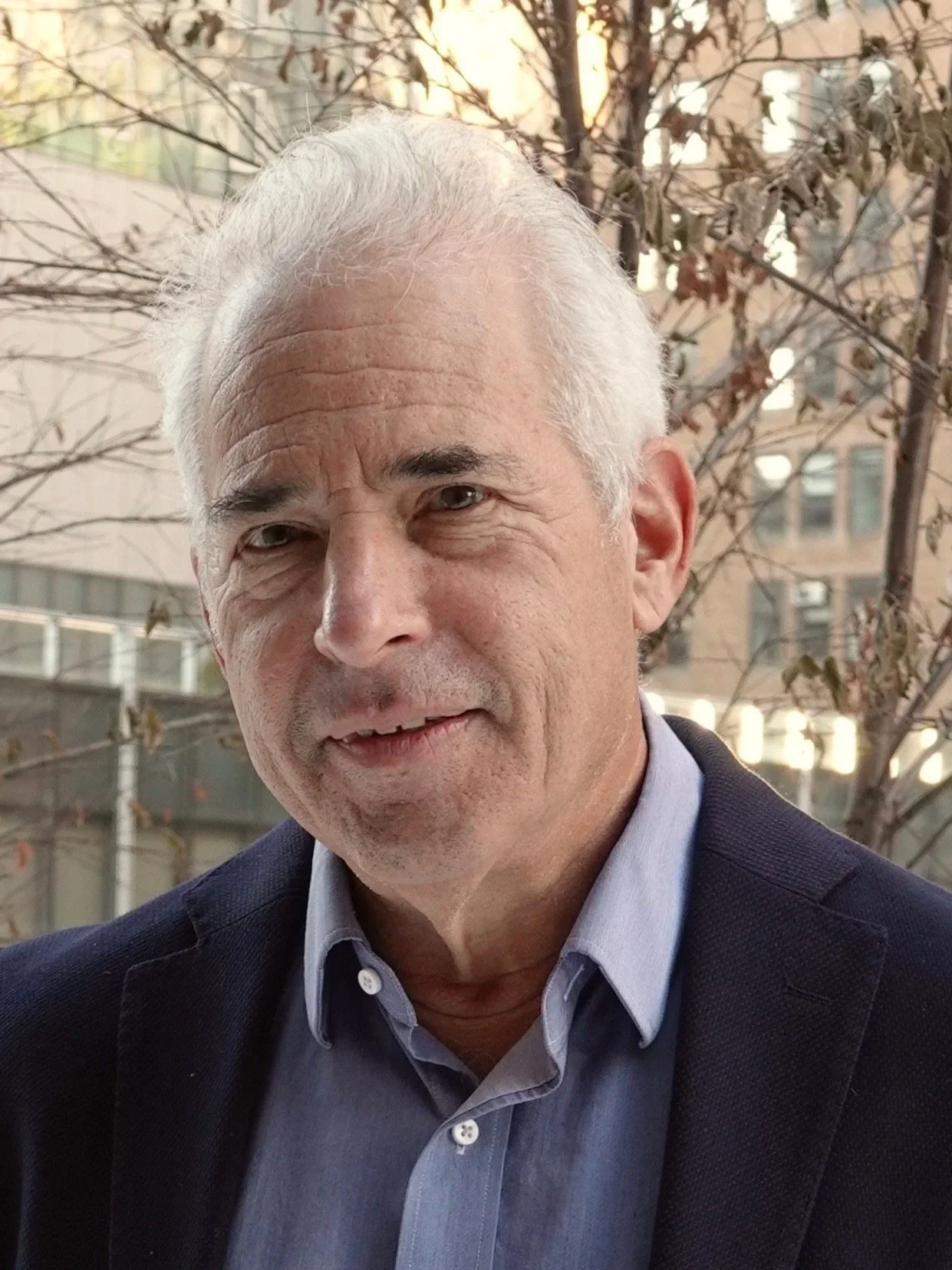
PHOTO: Talya Berger
JONATHAN BERGER
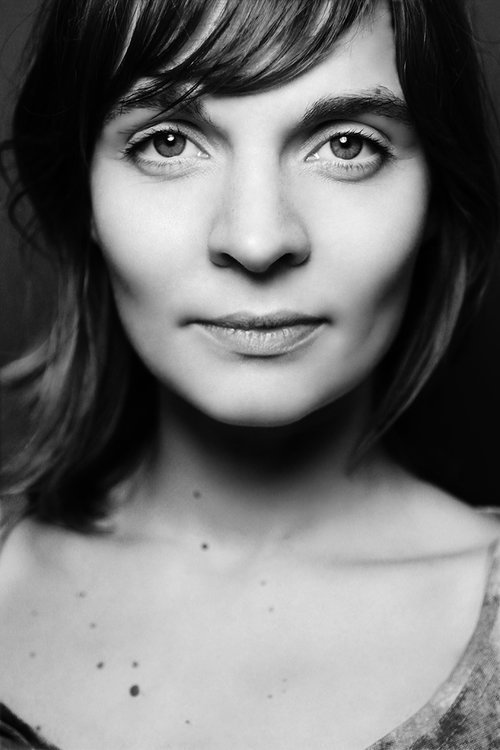
PHOTO: Antje Taiga Jandrig
HILDUR GUÐNADÓTTIR
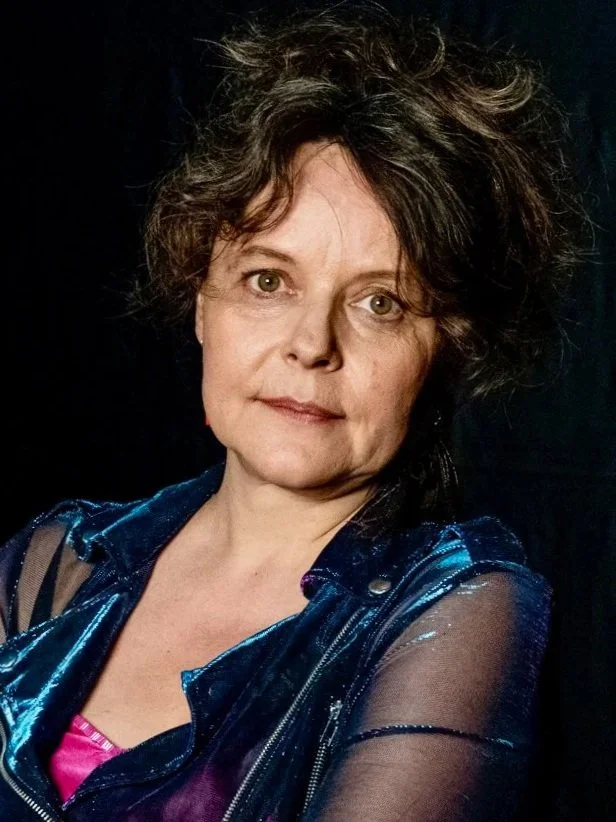
PHOTO: Marcus LIeberenz
MARIANA SADOVSKA
-
Jonathan Berger is the Denning Family Provostial Professor in Music at Stanford University, where he teaches composition, music theory, and cognition at the Center for Computer Research in Music and Acoustics (CCRMA). A 2017 Guggenheim Fellow and a 2016 winner of the Rome Prize, Berger was the founding co-director of the Stanford Institute for Creativity and the Arts (SICA, now the Stanford Arts Institute) and founding director of Yale University’s Center for Studies in Music Technology. Described as “gripping” by both the New York Times and the Chicago Tribune, “poignant,” and “richly evocative” (San Francisco Chronicle), “taut, and hauntingly beautiful” (NY Times), Berger’s recent works deal with both consciousness and conscience. The Kronos Quartet toured the recent monodrama, My Lai internationally. Thrice commissioned by The National Endowment for the Arts, Berger’s recent commissions include The Mellon and Rockefeller Foundations, Chamber Music Society, Lincoln Center, and Chamber Music America. In addition to composition, Berger is an active researcher with over 80 publications in a wide range of fields relating to music, science, and technology, and has held research grants from DARPA, the Wallenberg Foundation, The National Academy of Sciences, the Keck Foundation, and others.
-
Academy Award winning Hildur Guðnadóttir is an Icelandic composer, cello player, and singer who has been manifesting herself at the forefront of experimental pop and contemporary music. In her solo works she draws out a broad spectrum of sounds from her instrument, ranging from intimate simplicity to huge soundscapes. Her work for Film and Television includes “Sicario: Day of the Soldado”, “Mary Magdalene”, “Tom of Finland”, “Journey’s End” and 20 episodes of the Icelandic TV series “Trapped” (streaming on Amazon Prime).
In addition, her body of work includes scores for films such “Joker” starring Joaquin Phoenix, for which she won a Golden Globe award for Best Original Score and an Academy Award. Alongside the critically acclaimed HBO series “Chernobyl”, for which she received a Primetime Emmy award and a Grammy Award for Best Score Soundtrack for Visual Media.
“The HBO series stunning success owes much to Guðnadóttir’s evocative score, as discomfiting as the tragic history or malevolence on screen.” – Sydney Morning Herald
Gudnadóttir began playing cello as a child, entered the Reykjavík Music Academy and then moved on to musical studies/composition and new media at the Iceland Academy of the Arts and Universität der Künste Berlin.
Hildur has released four critically acclaimed solo albums: Mount A (2006), Without Sinking (2009), Leyfðu Ljósinu (2012), Saman (2014). Her records have been nominated a number of times for the Icelandic Music Awards. Hildur’s albums are all released on Touch.
She has composed music for theatre, dance performances and films. The Icelandic Symphony Orchestra, Icelandic National Theatre, Tate Modern, The British Film Institute, The Royal Swedish Opera in Stockholm and Gothenburg National Theatre are amongst the institutions that have commissioned new works by Hildur. She was nominated for the Nordic Music Council Prize as composer of the year 2014.
Among others Hildur has performed live and recorded music with Skúli Sverrisson, Jóhann Jóhannsson, múm, Sunn O))), Pan Sonic, Hauschka, Wildbirds & Peacedrums, Ryuichi Sakamoto, David Sylvian, The Knife, Fever Ray, OSMIUM, and Throbbing Gristle.
In 2018 Hildur was nominated for a Discovery of the Year Award at the World Soundtrack Academy in Gent and received several prestigious awards, including the Asia Pacific Screen Award for Best Score (“Mary Magdalene”) and Best Score at the Beijing International Film Festival for “Journey’s End”.
Hildur lives in Berlin, Germany.
-
Born in Lviv, Ukrainian singer, actress and composer Mariana Sadovska crosses all borders in her work, creating her own innovative compositions and arrangements in dialogue with ancient traditions. Archaic midsummer night invocations, wedding songs, and emigrant chants from remote villages in rural Ukraine get a singular turn and transmute into contemporary sound, from folk to avant-garde.
Sadovska was trained as a classical pianist at Lviv’s National Music School, and later joined Les Kurbas Theatre, one of Ukraine’s leading theater companies. In the 1990s Sadovska worked as a principal actor, composer, and music director with the Teatr Gardzienice in Poland, acclaimed for its virtuoso “anthropological-experimental” performances rooted in rugged fieldwork in isolated rural areas of the world.
Since 2001 she has been composing vocal music for different international theatre and music ensembles in Germany, Poland, the Czech Republic and the USA. Her composition SCLAVI – the song of an emigrant with Farm in the Cave of Prague was nominated for the Alfred-Radok Award. The Rusalka Cycle: songs between the worlds toured many festivals, such as the Giving Voice Festival, Globalize:Cologne in Germany, and Revolutions International Theatre Festival in Albuquerque, New Mexico.
Her solo concerts and band projects have brought her to many festivals and concert halls in Germany, France, Israel, Afghanistan, and the US. Sadovska has received a scholarship grant from the Earth Foundation in New Yorkm, a Künstlerstipendium from Staatskanzlei NRW/Germany, and a Fulbright fellowship, and was a scholar at the Princeton Atelier, a multidisciplinary artists program curated by Toni Morrison at Princeton University. She lives with her husband and two children in Cologne, Germany.