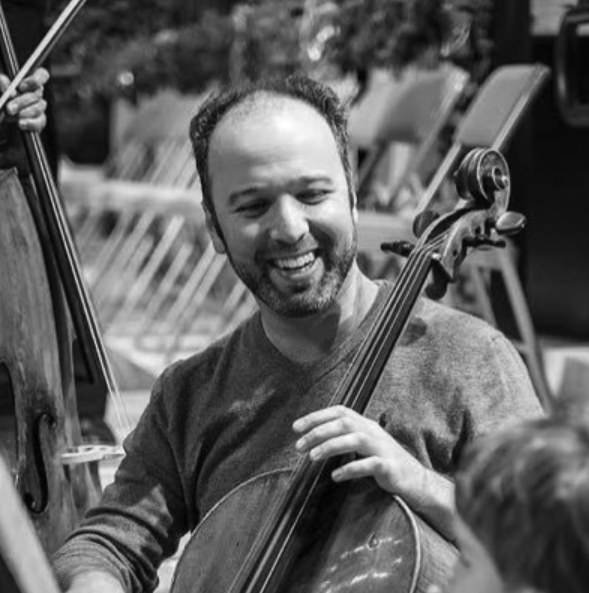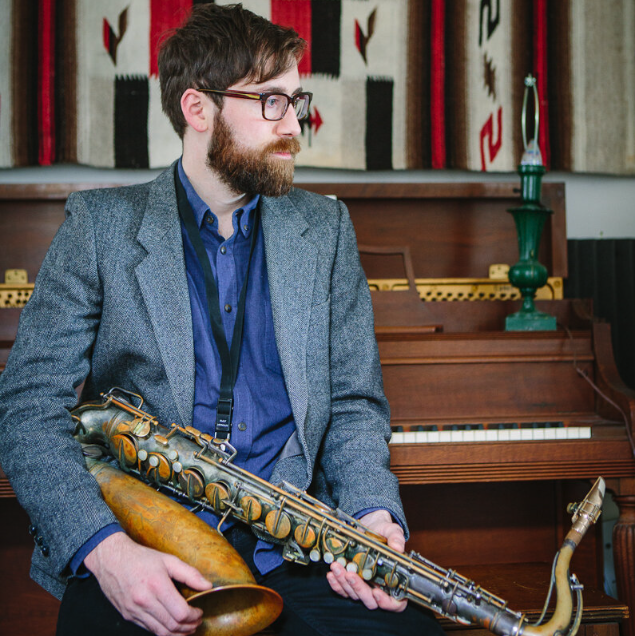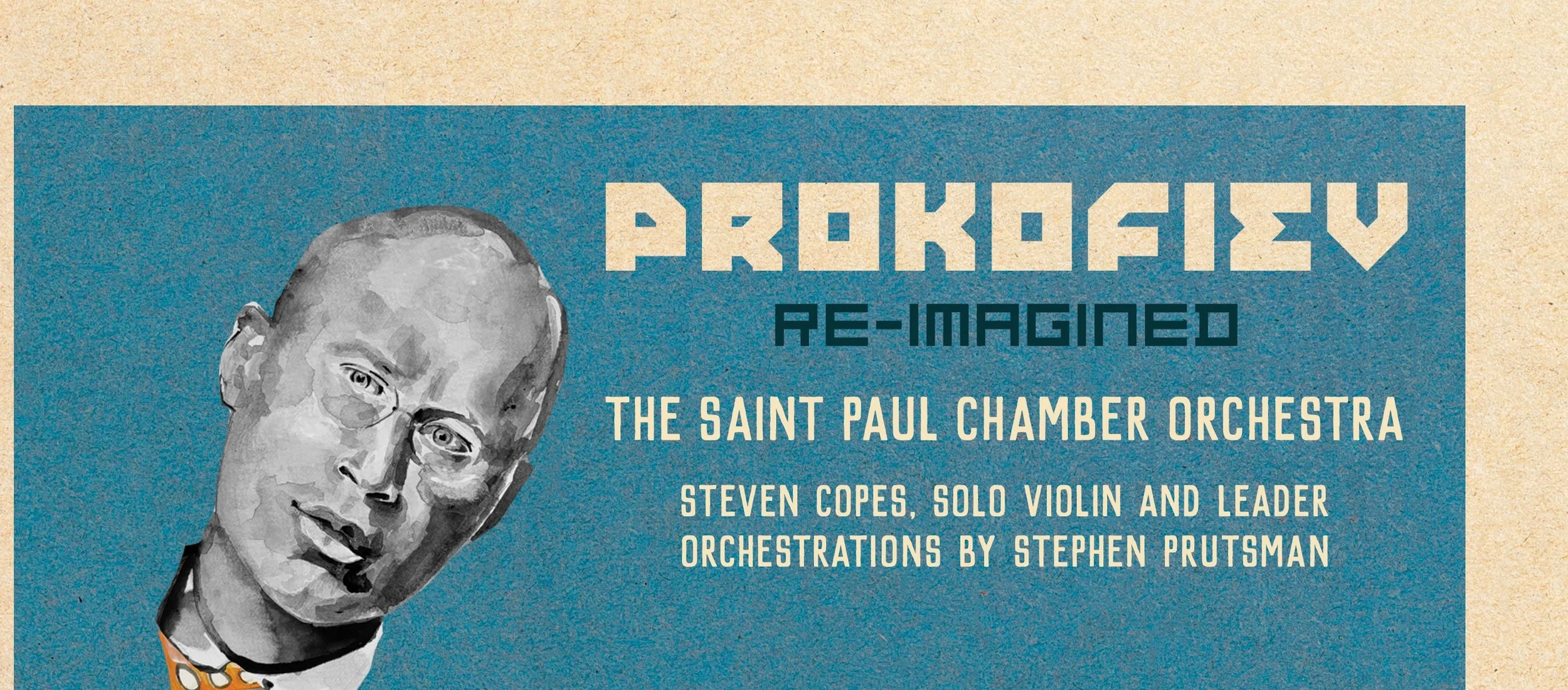

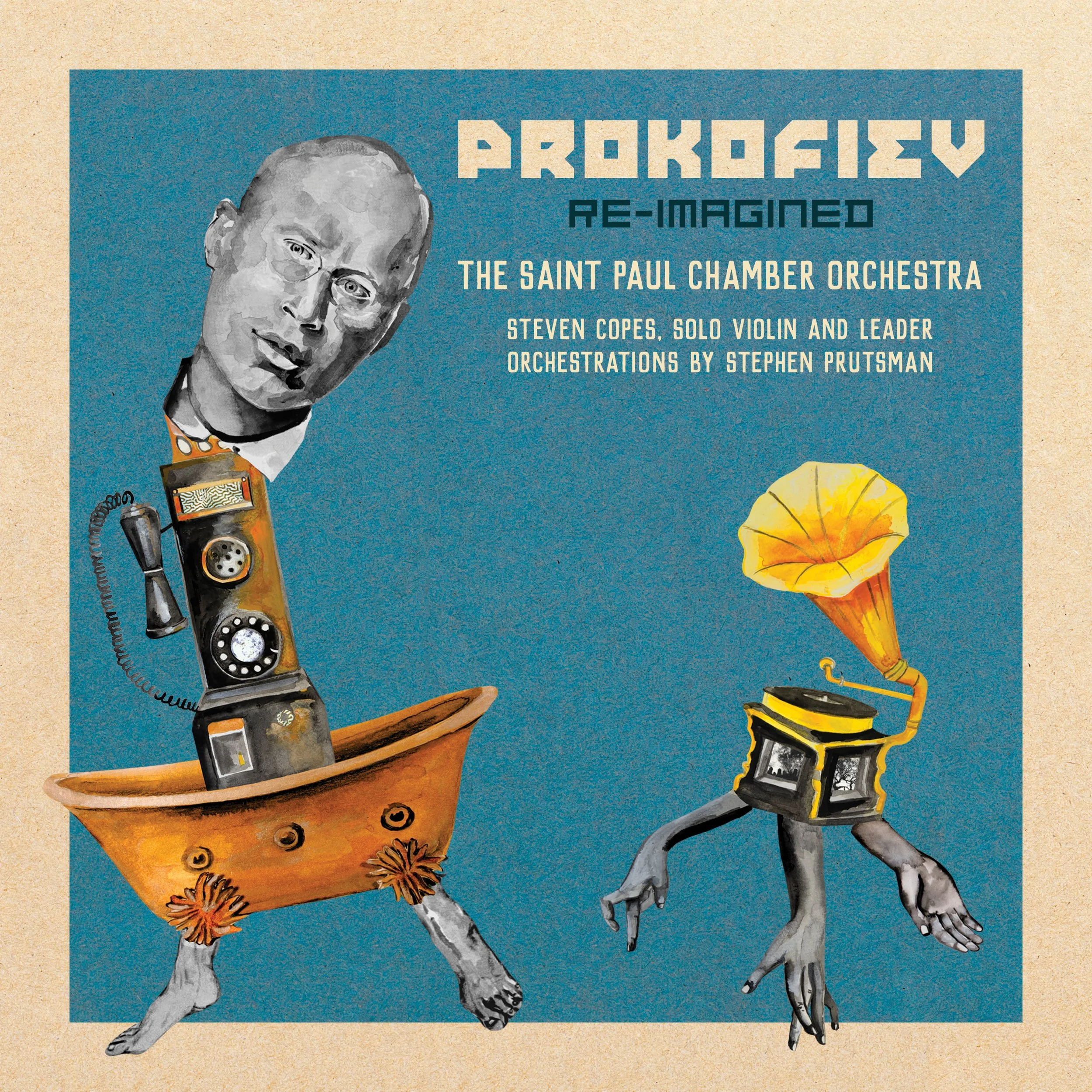
The idea to re-imagine Sergei Prokofiev’s sonatas for chamber orchestra did not begin as a grand concept. It began as a relationship. For more than three decades, violinist Steven Copes and pianist-composer Stephen Prutsman have shared a musical language. Over the years, that language evolved — through concertos, collaborations, artistic partnerships, and countless conversations. And a shared relationship with a particularly special orchestra.

Not rewritten. Re-imagined.

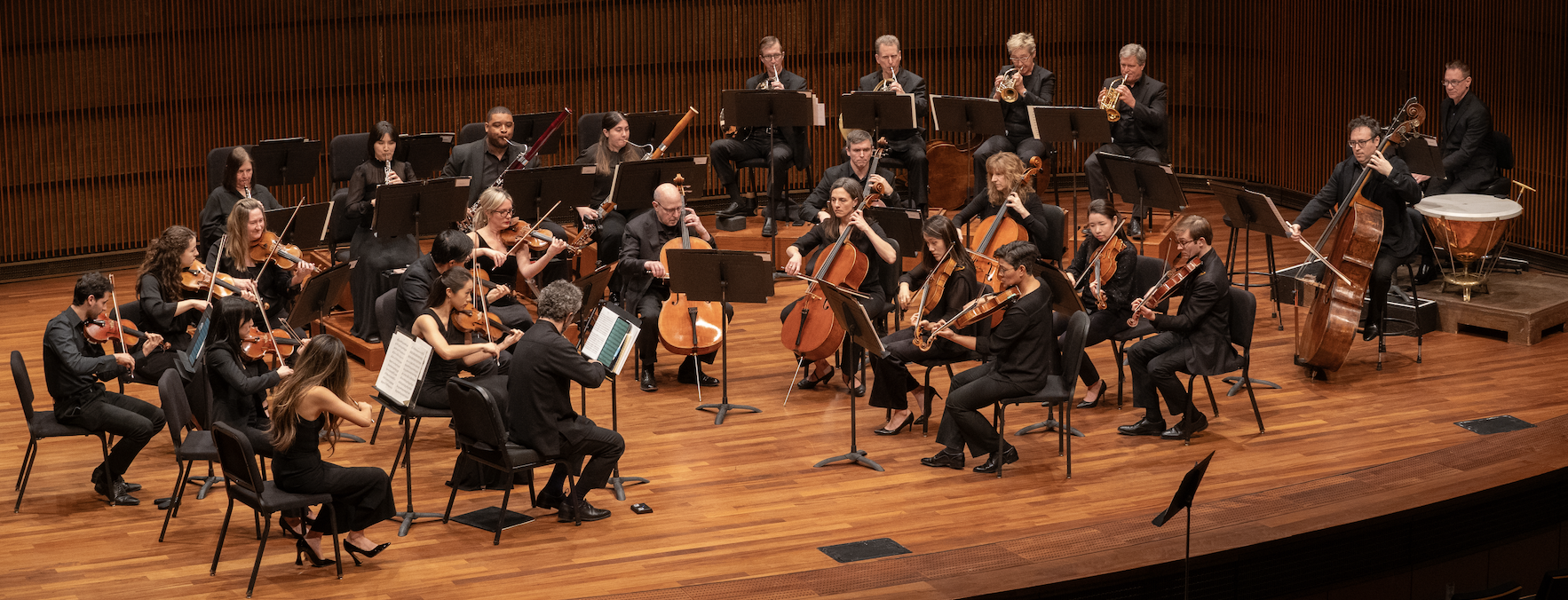
This recording is as much about the orchestra itself as it is about Prokofiev. “We call it player-led,” Copes explains. “There’s no one waving their hands. Everyone has to know more — not just their part, but everyone else’s.” That culture of collective responsibility shapes the sound from the first note.
Read more in Artist Notes and other Album Information below

Prokofiev Re-Imagined is a portrait of three forces in conversation:

Prokofiev’s uncompromising voice, Prutsman’s singular ear and vision for color, and the Saint Paul Chamber Orchestra’s collective artistry with Copes as a leader and featured soloist.

SINGLE:

Piano Sonata No. 7 in B-flat Major, Op. 83 “Stalingrad”: available May 8, 2026

Composed in 1942, during the height of World War II, Prokofiev’s Seventh Piano Sonata is music of volatility and propulsion — one of the three so-called “War Sonatas.” In its original form, the piano must generate every layer of sound. The new orchestration allows those layers to separate and breathe.

Musical Minds and Missions

PODCAST: Interview with Steven Copes & Stephen Prutsman

coming soon on July 7, 2026

Album Information

Title: Prokofiev Re-Imagined

Artists
The Saint Paul Chamber Orchestra 
Steven Copes, Solo Violin and Leader 

Piano Sonata No. 7 in B-flat Major, Op. 83 “Stalingrad”
  1. Allegro inquieto 8:26 

  1. Andante caloroso 6:40 

  1. Precipitato 4:07 

Sonata for Violin and Piano in F Minor, Op. 80 - Sergei Prokofiev (1891-1953) 

  1. Andante assai 6:08 

  1. Allegro brusco 6:37 

  1. Andante 6:59 

  1. Allegrissimo — Andante assai, come prima 7:00 

Orchestrations by Stephen Prutsman (b. 1960) 

Prokofiev’s sonatas were written during wartime — music of urgency, volatility, and sharp clarity. But for Prutsman, the orchestral impulse was already embedded in the writing itself. 

“These are orchestrations. Not arrangements. Not fantasies. Not transcriptions. Not a note was harmed. The pitches are Prokofiev’s. Almost entirely in their original register. What changed is the color.” 

— Stephen Prutsman

The Sonatas

Sonata for Violin and Piano in F Minor, Op. 80

The arrangement of Violin Sonata No. 1 is made possible by support from Michael Hostetler and Erica Pascal.

Begun in 1938 and completed in 1946, the F-minor Sonata spans years of political tension and artistic uncertainty. It is one of Prokofiev’s most emotionally complex works — bleak, biting, and unexpectedly tender.For the Saint Paul Chamber Orchestra, this sonata is not accompaniment to a soloist; it is chamber music at orchestral scale. “It wasn’t meant to be backup,” Copes emphasizes. “The orchestra plays the entire piano part. It’s a real sonata.”

I. Andante assai

Low, tolling chords open the movement. In orchestral form, those sonorities deepen — winds and low strings evoke the spectral atmosphere performers often describe as “wind over the graveyard.” The Saint Paul Chamber Orchestra’s ability to sustain pianissimo intensity heightens the sense of suspended breath. Prutsman points to the haunting close of the first movement of the F-minor sonata — muted violin scales flickering over chords. “How many times have we called that the ‘wind over the graveyard’?” he asks. “What happens if you actually let the winds breathe there? What happens if you let those colors emerge? We are then able to reveal another layer — like seeing the same image in 4K instead of standard definition. The structure is the same. The soul is the same. But the light is different.”

II. Allegro brusco

Sarcastic and rhythmically biting, this movement thrives on precision. In a player-led ensemble, timing becomes an act of trust. Brass and winds lean forward, allowing the music’s edges to remain intact.

III. Andante

Here the Saint Paul Chamber Orchestra achieves a paradox: intimacy at scale. With more instruments comes a broader dynamic spectrum — extremes of softness and color that intensify rather than dilute the violin’s inward voice. “With a larger group,” Copes notes, “you can sometimes get softer — more fragile — because everyone is listening so closely.”

IV. Allegrissimo – Andante assai, come prima

The finale’s restless energy dissolves into muted, spectral stillness. Distributed among winds and strings, the closing pages shimmer, revealing harmonic nuances often submerged in the piano version.

Piano Sonata No. 7 in B-Flat Major, Op. 83 “Stalingrad”

Composed in 1942, during the height of World War II, Prokofiev’s Seventh Piano Sonata is music of volatility and propulsion — one of the three so-called “War Sonatas.” In its original form, the piano must generate every layer of sound. The new orchestration allows those layers to separate and breathe.
I. Allegro inquieto

The opening movement’s angular themes ricochet across the Saint Paul Chamber Orchestra’s sections, motives passed between strings and winds with chamber precision. Instead of a single percussive engine, tension is distributed across the ensemble.

II. Andante caloroso

The central movement glows with fragile lyricism. Here, the Saint Paul Chamber Orchestra’s transparent texture becomes an asset: inner voices that sit in the piano’s middle register emerge in clarinet and muted strings, lending warmth without sentimentality.

III. Precipitato

The finale remains one of the most electrifying movements in twentieth-century piano literature. Translating its mechanistic drive was a challenge. “The notes are all there,” Prutsman explains. “But I had to re-bar certain passages so the ensemble could physically play it together. The energy had to remain unstoppable.” In the Saint Paul Chamber Orchestra’s hands, propulsion becomes collective — rhythmic cells surging through strings, winds, and percussion with shared urgency.

Sergei Prokofiev (1891-1953)

  • Piano Sonata No. 7 in B-flat Major, Op. 83 “Stalingrad”  
    Sergei Prokofiev (1891-1953)  

    1. Allegro inquieto 8:26 

    1. Andante caloroso 6:40 

    1. Precipitato 4:07 

    Sonata for Violin and Piano in F Minor, Op. 80                         
    Sergei Prokofiev (1891-1953) 

    1. Andante assai 6:08 

    1. Allegro brusco 6:37 

    1. Andante 6:59 

    1. Allegrissimo — Andante assai, come prima 7:00 

    Orchestrations by Stephen Prutsman (b. 1960) 

  • Sacks & Co Press Release Coming Soon!

  • About Phenotypic Recordings

    Phenotypic Recordings brings to light new music by world-class musicians and innovative composers, with a focus on music that highlights the most important issues facing the world today. As another way of amplifying artistic voices, Phenotypic donates its revenue from streaming and downloads to support humanitarian causes identified by the artists making the music.

  • About The Saint Paul Chamber Orchestra

    Founded in 1959, the Grammy Award-winning Saint Paul Chamber Orchestra (SPCO) is renowned for its artistic excellence, remarkable versatility of musical styles and adventurous programming. SPCO concerts are primarily musician-led and include a broad range of repertoire, from Baroque works to new music, in close collaboration with a dynamic roster of internationally acclaimed Artistic Partners. Through a distinctive musician-led artistic model, SPCO musicians lead and develop the orchestra’s programming, determine members and choose artistic collaborators.

    Deeply rooted in its community and committed to accessibility, the SPCO presents performances in venues throughout the Twin Cities, creating meaningful connections between artists and audiences. Through its innovative approach to performance and engagement, the orchestra fosters an environment where music is both intimate and expansive — inviting listeners into experiences that are personal, powerful and profoundly human.

    For more information: thespco.org

NEWS